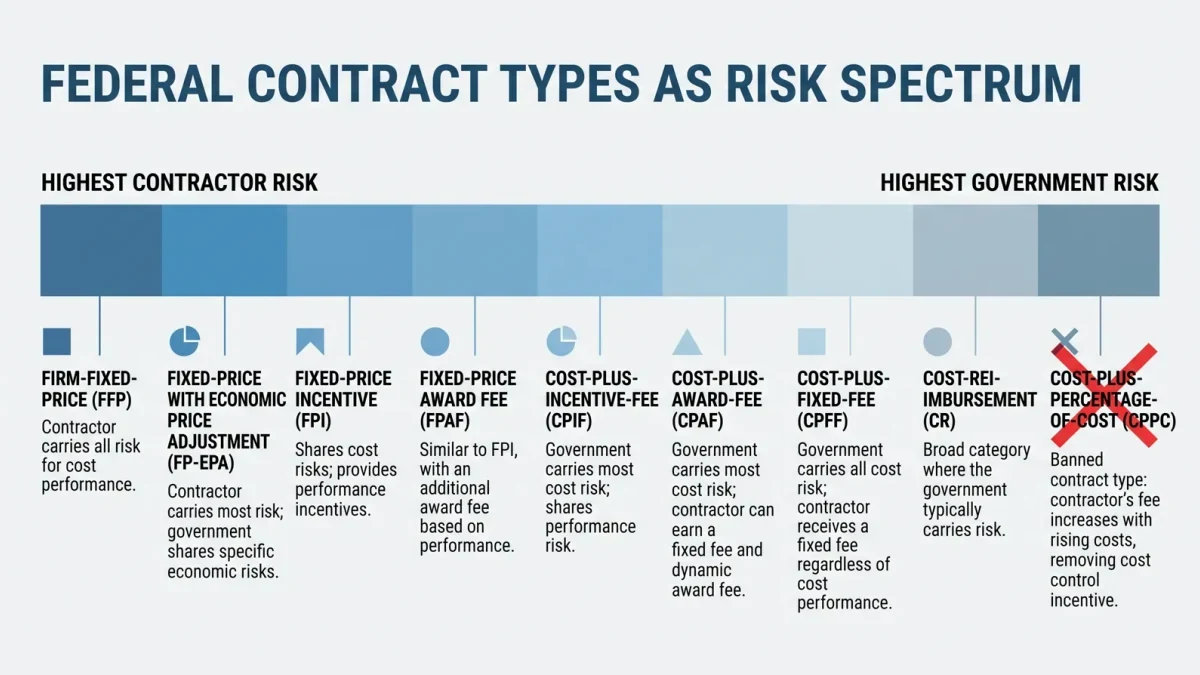
An economic price adjustment clause, or EPA, moves a fixed price up or down by a formula agreed before signing — usually a labor or material cost index — and Federal Acquisition Regulation Part 16.203 governs when US agencies may use one. The clause lets the Pentagon keep fixed-price discipline while sharing inflation risk instead of forcing padded bids.
EDN News 12 is an online publication, not a broadcaster, and this analysis works from published regulation and official reporting only. The mechanism matters for weapons programs because they run long: a missile contract signed in one budget year delivers years later, and the aluminum, titanium, electronics and wages inside it do not hold their price. EPA clauses are the tooling that lets both parties stop pretending otherwise.
What does the clause actually do to the price?
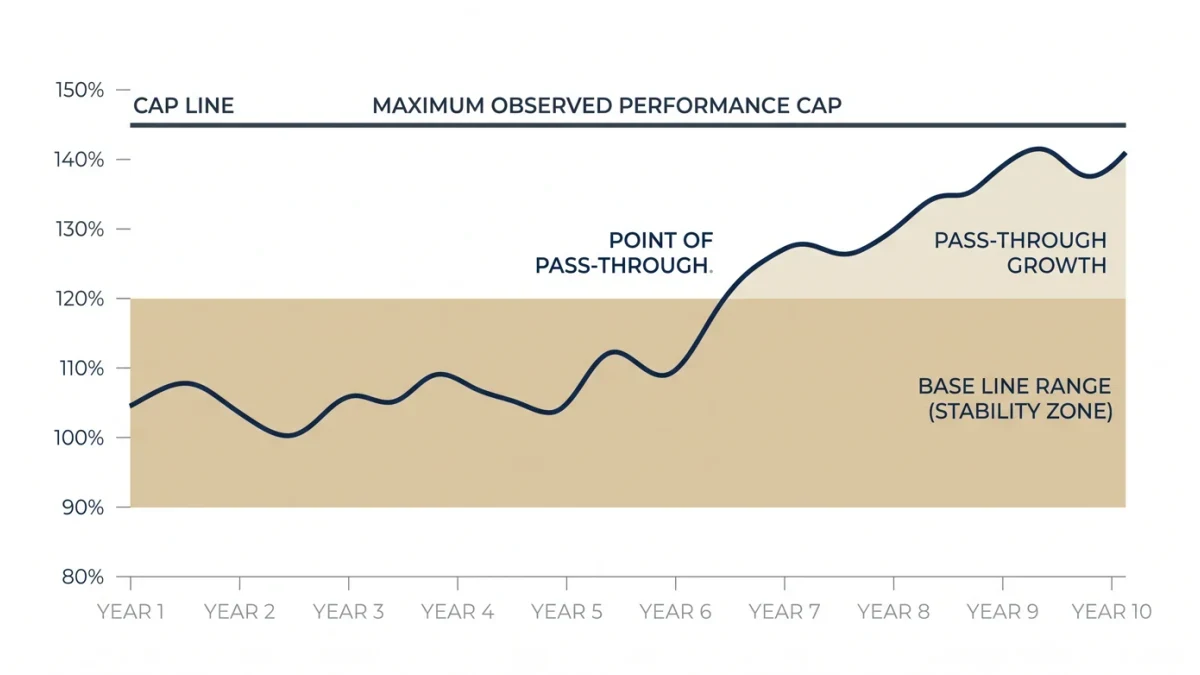
FAR 16.203 recognizes two families of adjustment. The first adjusts against established prices — catalog prices, market prices, or prices set by law or regulation — with the contract paying the same escalations the seller charges other customers. The second adjusts against actual costs of labor or material, using contingencies specified in the contract for both increases and decreases. Either way, the operating principle is the same: the movement is formulaic, not discretionary, and it cuts both ways — the contractor who gets relief when steel rises owes money back when steel falls.
That symmetry is the design feature. A plain fixed-price contract under FAR Part 16 puts essentially all cost risk on the contractor; an EPA contract converts a slice of that risk into a pass-through keyed to objective external measures. The contractor keeps the risk it can manage — hours, scrap, schedule — and sheds the risk it cannot: an economy-wide wage index or a commodity market. The government, in exchange, avoids paying an insurance premium baked into every bid.
Which indexes and rates drive the adjustment?
For the second family, the contract names its measures: a published labor index, commodity prices, or government-prepared escalation factors. Defense acquisition has its own layer here — the Department of Defense publishes joint escalation rates and service-specific inflation guidance each budget cycle for use in cost estimates and appropriate contract structures, so negotiators are not free-lancing their assumptions. The FAR directs agencies to pick established, regularly published indexes wherever available, because the moment an index becomes contestable, the clause stops being a formula and starts being an argument.
Index choice is where the real negotiation lives. A generic national inflation index is objective but badly matched to a specific weapon — interceptor electronics and airframe forgings do not track consumer prices. Narrow indices track the actual cost base but can be gamed by contractors whose business sits disproportionately in the measured inputs. Negotiators weigh precision against manipulability, and the FAR's insistence on established published indexes is a compromise between the two.
Why does the government accept inflation risk at all?
Because the alternative prices in worse. On a plain fixed-price contract, a rational contractor facing multi-year inflation uncertainty adds contingency to every bid — and when inflation surprises high, the loss lands anyway, in supplier distress, claimed relief, or quality pressure. GAO has repeatedly examined the consequences: after the 2021–2023 inflation surge, defense contractors on fixed-price work sought relief through requests for equitable adjustment and renegotiation, and GAO reporting on contractor relief has documented the volume and cost of such claims to Congress and the public.
The EPA clause is the structured alternative to that scramble. Adjustment flows through the agreed formula, documented and auditable, rather than through post-hoc claims whose size depends on leverage and litigation appetite. For the government, a modest, formula-bounded exposure beats an open-ended exposure to contractor distress on programs it cannot quickly re-source — a second source for a qualified interceptor seeker does not exist on demand.
Where does risk still stay with the contractor?
The clause is narrow, not a general safety valve. It covers only the indexed inputs the contract names; a contractor whose other costs inflate has no recourse. FAR 16.203 directs agencies to use EPA only where there is genuine uncertainty about future market conditions and to avoid structures that shift ordinary efficiency risk — poor estimating, wasted labor, production inefficiency remain the contractor's problem. And limitations on cost increases or decreases can cap the adjustment, leaving the contractor exposed beyond the ceiling. Nothing in an EPA arrangement excuses schedule performance or dilutes the fixed-price incentive to control the costs the formula does not reach.
Buyers should also note the residual gaming risk. When adjustments key to a contractor-reported cost base, audit attention follows; the FAR framework relies on the established-price variants wherever possible precisely to keep the adjustment outside the seller's control. The honest summary: EPA converts an unknowable risk into a bounded, measurable one — it does not abolish it.
What do buyers and contractors dispute once the clause exists?
The recurring argument is whether the trigger actually fired. Index data publish with a lag, baseline figures get set at award, and both sides re-run the arithmetic — so mature EPA contracts specify the exact index series, the measurement period, the baseline and the computation date, leaving as little as possible to interpretation. When the contract is silent on any of those, the formula's advantage evaporates and the parties are back to negotiation, just with paperwork attached.
The second recurring fight is scope: which costs were inside the indexed basket at award. A contractor argues a new titanium surcharge belongs under the material index; the government argues it is an ordinary cost the contractor priced. Contract structure decides the winner before the argument starts, which is why acquisition professionals treat clause drafting — not the headline price — as the real negotiation in long-run weapons buying.
What did the inflation surge of the early 2020s teach?
It taught the mechanism's value in both directions. Programs on plain firm-fixed-price contracts absorbed shocks loudly, through claims, renegotiated lots and, in some reported cases, contractor exits from marginal production work; the Department's own responses — including relief authority exercised by the military departments on demonstrated inflation losses — confirmed that the pure risk transfer had become unpriced in practice. Contracts carrying EPA structures adjusted more quietly, through formula, with the paper trail to show for it.
The lesson for future weapons contracts is not that fixed pricing failed; it is that unindexed fixed pricing across long production runs is a bet both parties lose when volatility spikes. Economic price adjustment is the plumbing that keeps the fixed-price principle survivable in a real economy. That is the whole trade.