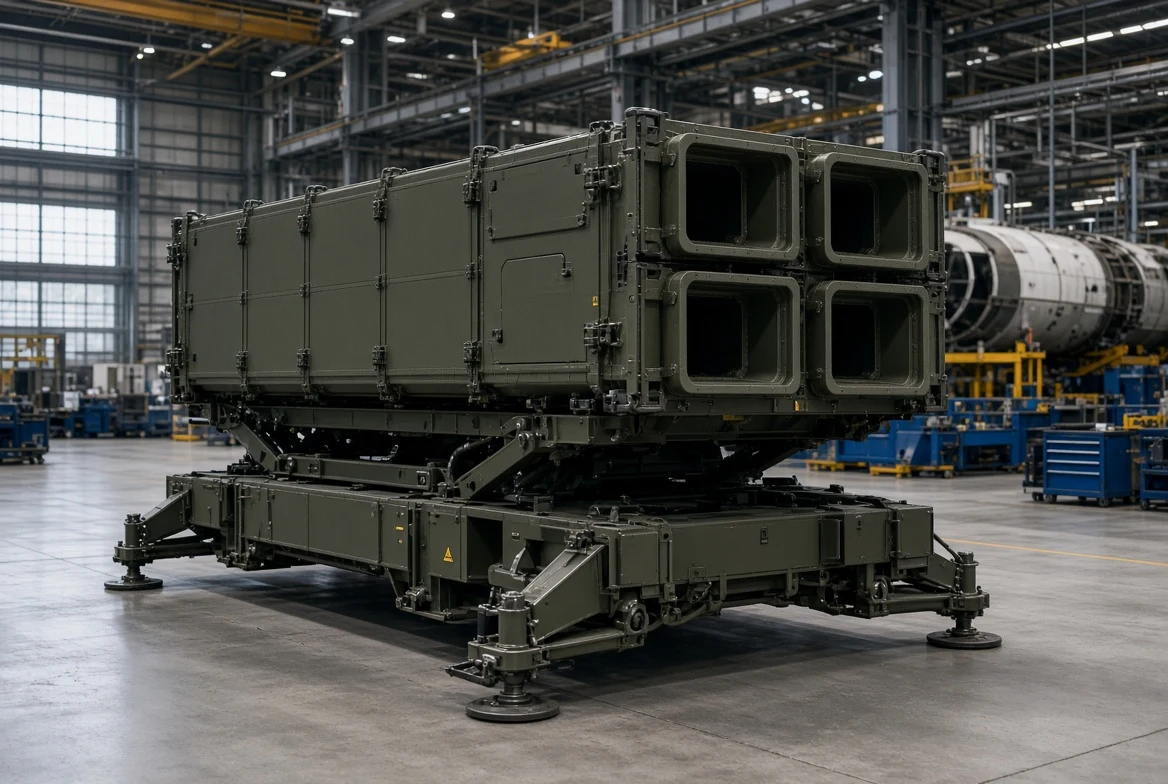
The US Navy is moving to integrate the PAC-3 Missile Segment Enhancement missile, the Army's hit-to-kill interceptor, into the Aegis Combat System for the first time, per Lockheed Martin's April 21, 2026 announcement of a US government award for development, integration and testing of the pairing. The decision matters less as a contract than as doctrine: the same interceptor that defends static sites from the ground will ride in surface combatants, and the magazine arithmetic of both services changes with it.
EDN News 12 is an online publication, not a broadcaster. The contract's existence was announced by the manufacturer, which is the attributed source for its own award terms; no independent test data for the shipboard pairing exists in public sources.
Why put an Army missile on a ship?
Because magazines, not sensors, are the constraint. Per the manufacturer's own datasheets, PAC-3 MSE adds larger dual-pulse motor and bigger diameter control surfaces to the PAC-3 family, trading some range for greatly improved kinematic reach against maneuvering ballistic targets. Aegis cruisers and destroyers already carry SM-3 and SM-6, per the Missile Defense Agency's published descriptions, but every cell is finite. A second hard-kill option lets one ship engage more targets and hold SM-3s for the highest-threat exoatmospheric shots.
What does integration actually require?
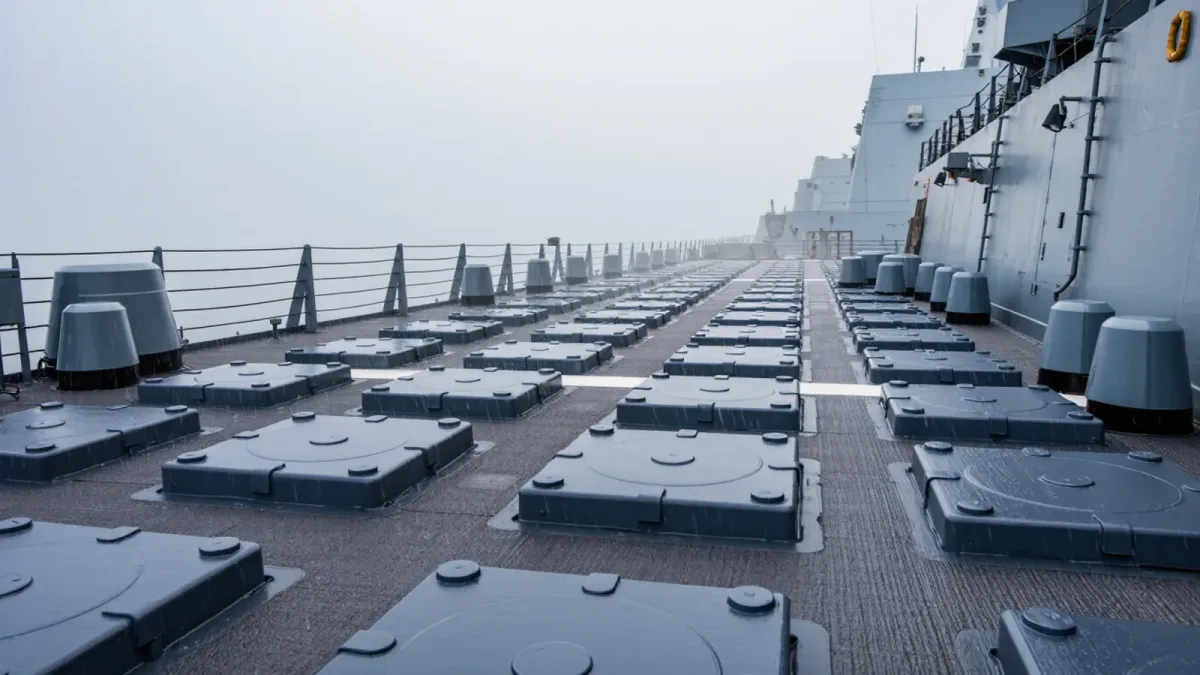
Three layers, none trivial. The missile must communicate with the Aegis weapon system's engagement logic; it must fit the Mk 41 vertical launch system's canister and launch sequence; and the fire-control loop that today cues PAC-3 MSE from ground radars must be re-plumbed to ship sensors and cueing. Per Lockheed Martin's release, the award covers development, integration and test, which is exactly that stack. Publicly available sources do not state the contract's dollar value or the timeline for a first shipboard firing.
Is this the same missile the Army fields?
In essence yes, and that is the point. The government decision extends an interceptor already in Army service, which lowers technical risk compared with a clean-sheet design. Per the Missile Defense Agency's public descriptions of layered defense, the architectural idea is a common interceptor family usable across domains; the Navy's move is the first time the Army's terminal-phase missile becomes a sea-based option inside a US combat system.
What should watchers track next?
Three markers: a disclosed contract value and schedule, the first announced canister qualification round, and whether allied Aegis navies, whose fleets share the Mk 41 infrastructure, request the same capability through foreign military sales. Each would convert this from an integration study into fielded magazine depth.
One missile family, two services, one launcher standard. That is the whole efficiency play.