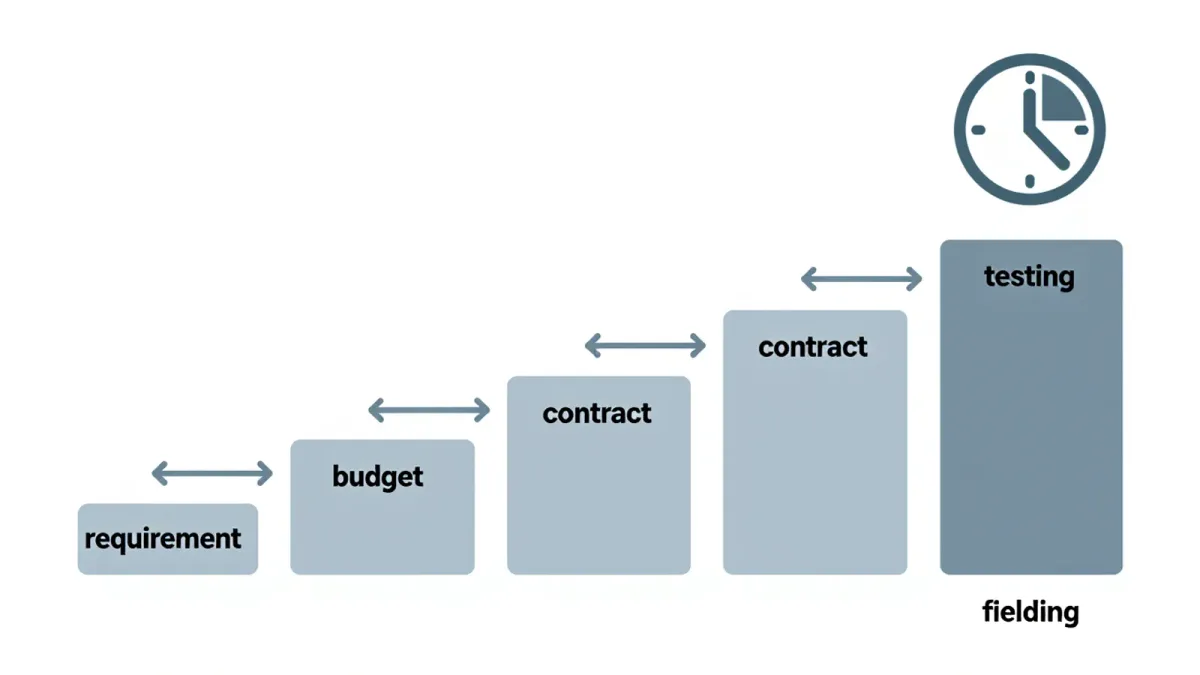
The government budget cycle is the repeating sequence by which a government plans, requests, approves and spends public money. In the United States, the central rule is that public spending must pass through the lawmaking process: Congress writes and passes funding legislation, and the president can veto what Congress passes. When that lawmaking stalls, the calendar slips, and the delays are where budget deadline risk comes from.
The Constitution is the reason for that structure. As USAGov explains, the Constitution divides the federal government into legislative, judicial and executive branches so that no individual or group holds too much power, with each branch able to check the others. The president can veto legislation created by Congress and nominates heads of federal agencies and high court appointees; Congress confirms or rejects those nominees and can remove the president from office in exceptional circumstances. That back-and-forth between the branches is where every budget deadline ultimately comes from.
This explainer follows the process in order: the executive's proposal, the legislative work of writing and passing funding law, and what happens when the two branches do not agree. The same mechanics sit behind the defense procurement stories we cover in our Government News coverage, from interceptor production plans to multi-year missile buys. This connects to our earlier piece, A Senate bill wants to fix how the Pentagon buys air and missile defense.
Where does the power to spend come from?
According to the White House's government overview, the Constitution was drafted at the 1787 Constitutional Convention in Philadelphia, where delegates from 12 of the 13 states gathered to redesign a government that had proven ineffective. Its chief aim was to create a government with enough power to act on a national level without so much power that fundamental rights would be at risk, accomplished by separating power into three branches with checks and balances so that no one branch gained supremacy.
The contrast with what came before is instructive. Under the Articles of Confederation, the central government could not raise any funds itself and was entirely dependent on the states for the money necessary to operate, which the White House notes left it paralyzed and ineffectual. The spending power the framers eventually gave Congress under the new Constitution is the mechanism the modern budget process exists to exercise. For related coverage, see Poland signs a record 2026 budget that lifts defense spending to about 4.7 percent of GDP.
What does Congress do with a funding request, and why does it take so long?
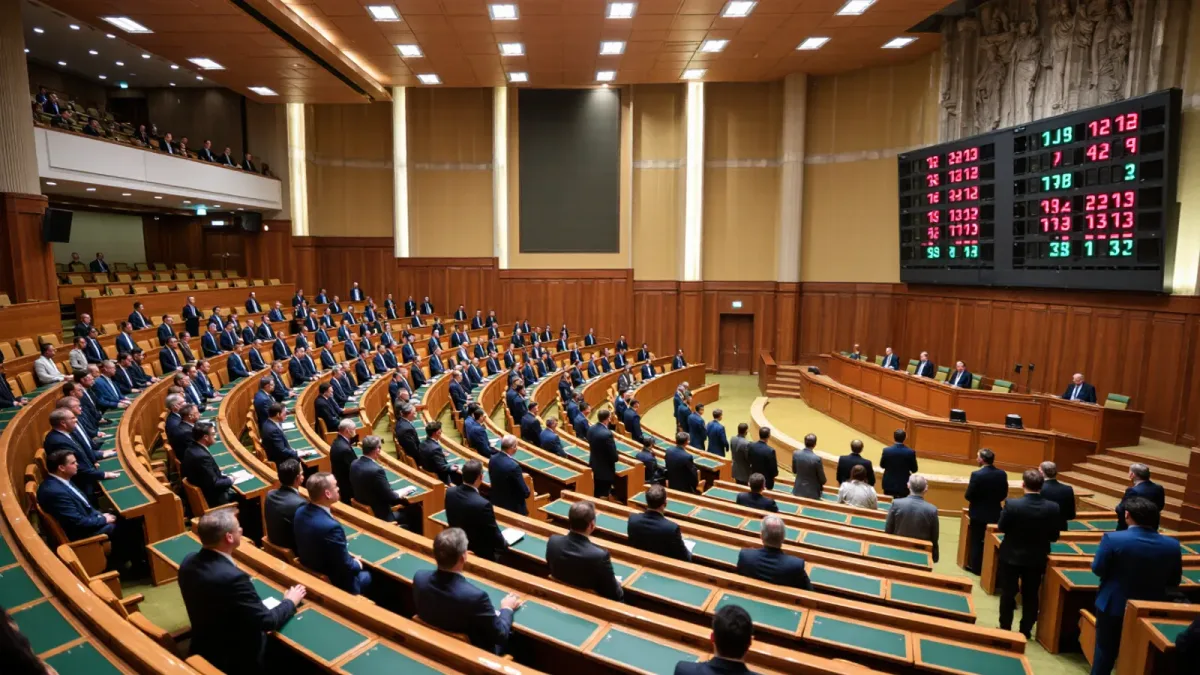
Congress, as the legislative branch, is the body that turns spending proposals into law. Under the separation of powers described by USAGov, the president can veto legislation created by Congress, which means any funding bill must be crafted with the executive's potential objection in mind. The two chambers of Congress must also agree with each other, and every step of drafting, amending and voting is a place where the calendar can slip. That is the whole trade: a process built for deliberation runs on a fixed clock.
For defense readers, the legislative stage matters because it is where programs first receive legal authority and money. A new interceptor line, a sensor upgrade or a foreign military sale exists on paper long before any contract is signed, and only the passage of law moves it forward.
What happens when the process runs late?
Because no branch can act alone, delays compound. Congress must pass legislation and the president must sign it before funding authority is settled; until both happen, agencies operate under whatever law is already on the books. The later in the calendar the legislative process runs, the greater the risk that temporary or incomplete arrangements become the norm. Programs that assume steady annual funding, such as a multi-year missile purchase or a factory expansion, feel this acutely, because compressed or uncertain funding shifts risk onto the suppliers who must deliver.
What happens if no funding law passes at all?
If the legislative and executive branches fail to agree on a funding law, the government is left without new legal authority to spend. Resolving that impasse depends entirely on politics: it ends only when Congress passes and the president signs whatever funding law the moment produces. There is no automatic endpoint, because under the constitutional design no branch can impose one by itself.
How does this connect to the defense stories we cover?
Almost every procurement story on this site is downstream of this legislative process. Authorization and appropriation, export-driven sales and executive orders on arms transfers all move on clocks set by the same separated powers. Factory output promises, like plans to expand interceptor production, depend on funding law arriving on time and in predictable amounts.
Our analysis: the single most useful habit for a reader is to watch the legislative calendar itself. When the funding process slips past the summer, delay risk rises; when the fall arrives without settled funding, the risk to programs in the next quarter grows. Short-term fixes mean repeated cliff edges; a settled law means a stable year.
What the constitutional structure establishes, and what it does not
The sourced evidence is clear on the structure: three branches with checks and balances, Congress's role in passing legislation, a president who can veto it, and a Supreme Court that can overturn unconstitutional laws. What public sources do not establish in advance is the political outcome, which bills pass, when, and on what terms. Those are decided in real time, and any coverage of them should be read as contested until the law is actually signed.
For readers who want the deeper grounding, the White House overview also traces how the Constitution has been amended 27 times since its ratification through an onerous process requiring two-thirds of both Houses of Congress and ratification by three-fourths of the states, and how the Great Compromise gave the House representation apportioned by population and the Senate equal representation per state. Britannica, in its general account of government as the political system by which a country or community is administered and regulated, notes that tax gatherers were key figures in every civilized society as early as the first cities of Sumer, a reminder that raising and spending public money has always been a core function of organized government.