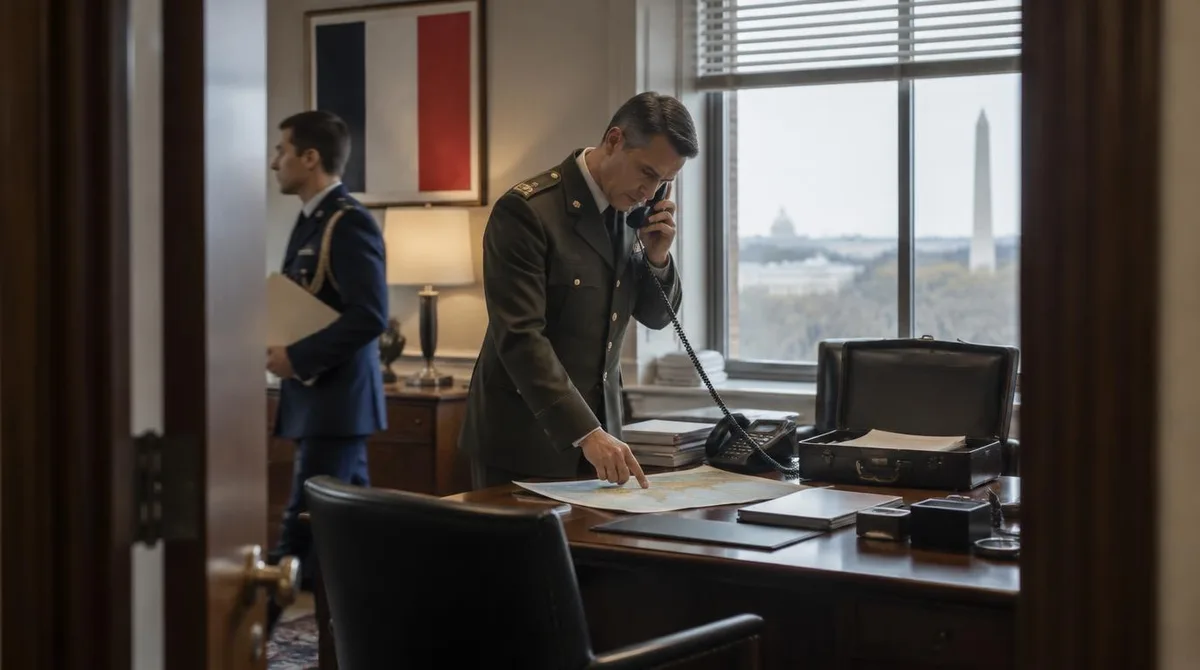
A defense attache is a uniformed officer posted to an embassy, per the standard reference record. The officer advises the ambassador, speaks for the armed forces, and reports on the host military. Attaches keep their military rank while holding diplomatic status. The job is two careers worn at once.
That definition sounds narrow. The work behind it is not. An attache briefs on arms transfers one week and escorts a visiting general the next, and a host state sees it all plainly. The sections below walk the duties, the history, and the limits, per the public record. Readers following this should also see Base protection explained: how perimeter security, point defense and the gaps between them work.
Why does an embassy need a uniformed officer?
Someone inside the mission must speak for the armed forces, not for the foreign ministry. The defense attache is the voice of the defense establishment, with charge of bilateral military ties, according to the reference account on military attaches. Advice, liaison, and reporting hang off that line.
The word itself is French, and it marks a person attached to a mission for one special task, per the same record. Attaches come from any branch, and some states post separate air force and naval officers, per the reference text. The Vienna Convention of 1961 wrote the rights of diplomats into treaty law, per the historical account. In American practice, the State Department's Foreign Affairs Manual sets how mission staff are accredited and protected.
What does the job involve day to day?
Three threads run through the post: advice, liaison, and open reporting, per the reference record. The mix shifts by country. The duties themselves have held stable for a century. A duty list from Tokyo in the early twentieth century reads like a modern one, per that account. This connects to our earlier piece, What reserve forces actually contribute to a country's air defense posture.
- Advising the ambassador on military and security questions, per the definition of the post.
- Serving as the standing link between the two militaries, according to the practice on record in Tokyo before 1905, when the attache liaised with the Japanese high command.
- Watching and reporting on the host military in the open, per the record, which lists translated manuals and reports on units the officers were allowed to visit.
- Taking on adjacent files such as migration or law enforcement when a post requires it, according to the same text.
The Tokyo case shows how deep the habit ran. Language officers lived with host regiments to learn Japanese and observe, according to the account. Eight American officers rode with both sides in the Russo-Japanese War, per the same source. Their published reports fed home staffs for years.
How public is the reporting, and where is the line?
Most of the product is open by design, per the agreed rules of the trade. Attaches watch what a host expects a diplomat to watch. They read what everyone reads and write the judgments their capitals need. Open gathering is fair work; public sources do not establish any secret detail.
The line can be missed at fatal cost, as the record notes. Major Arthur Nicholson, an American defense attache, was killed in East Germany in 1985 while photographing a military site, according to the account. The case remains the standard caution for the whole trade.
One structural point completes the picture, per the State Department's manual. Staff accredited to a mission carry the protections of the Vienna Convention, according to that text. The uniform sits inside the diplomatic system, not outside it.
Conclusion: a soldier's commission inside a diplomat's frame
The defense attache role is two jobs at once, and the public record is clear on both. The officer keeps a commission and speaks for a defense establishment, per the definition of the post. The same officer holds diplomatic status under treaty and department rules, per the State Department's manual. Advice, liaison, and firm reporting fill the week.
What no public document shows is any single report. That silence is the honest limit of the subject. Coverage past the record is guessing, not reporting. That boundary is the real job description.