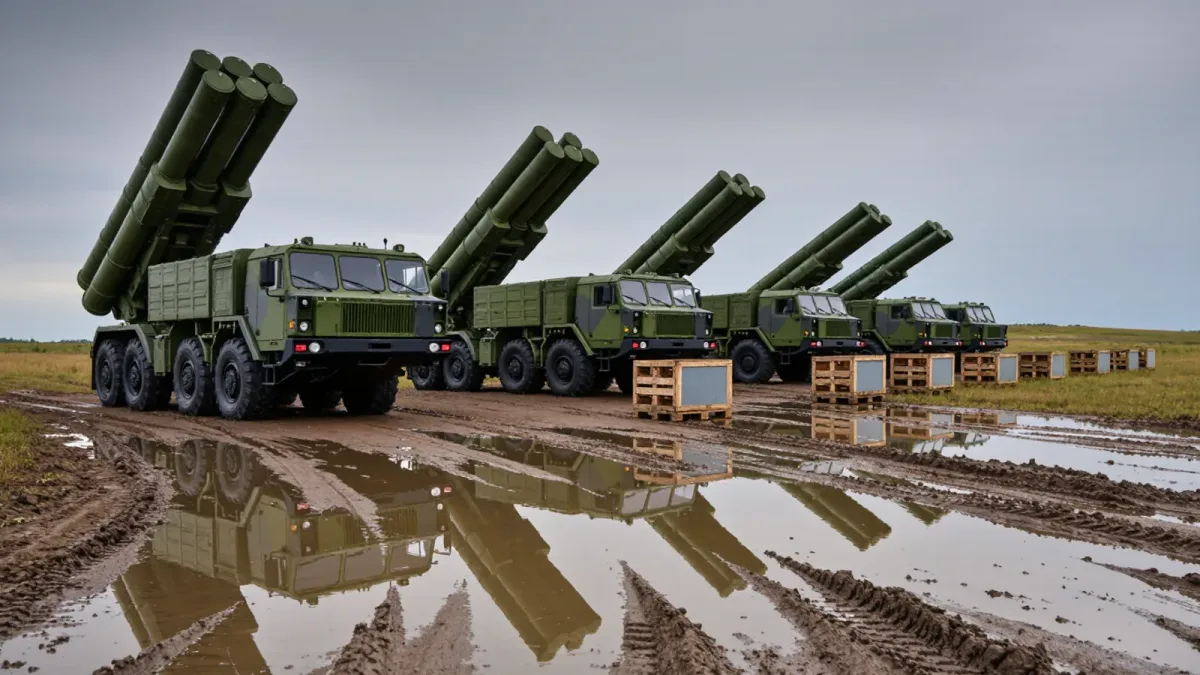
The cost-exchange problem is the arithmetic of spending an expensive interceptor on a cheap target: U.S. Army budget justification materials for fiscal year 2024 listed the PAC-3 MSE interceptor at roughly $4 million per round, while public estimates of the one-way attack drones it and similar systems increasingly face run to tens of thousands of dollars — an exchange ratio in the hundreds-to-one range. The defense works; the ledger hurts, and the gap shapes procurement more than any single threat study.
This piece walks through why interceptors cost what they cost, which targets actually make the exchange bad, and what defenders are buying to change the ratio. EDN News 12 is an online publication, not a broadcaster, and every figure here carries its source type inline — manufacturer claims, official budget documents, and public reporting stay clearly separated.
What is the cost-exchange problem, precisely?
Strip the emotion out and the problem is a ratio: the cost of the defensive effect divided by the cost of the offensive effect it neutralizes. When a $4-million-class interceptor — the Army's own budget figure — meets an airframe that open reporting values in the tens of thousands of dollars, the defense can win every engagement and still lose the economic contest, because the attacker reloads drones faster than the defender reloads interceptors. The ratio matters most where magazines are finite: a battery that carries a fixed number of rounds cannot afford to spend its best shots on its cheapest threats.
Two qualifications keep the problem honest. First, exchange ratios are contested in wartime and publicly available sources do not establish precise costs for either side's weapons; drone airframe estimates in particular vary widely and are rarely confirmed. Second, cost per round is not cost per kill — launchers, radars, crew training, and magazine depth all sit in the denominator of real defense economics.
Why do interceptors cost what they cost?
A guided interceptor is a small aerospace vehicle with one flight. The seeker, the guidance electronics, the energetic materials, the airframe tolerances, and the safety arming stack are all engineered to work perfectly, once, after years of storage in a container. Qualification testing consumes rounds by the dozen at program start; production volumes are small compared with consumer manufacturing, so there is no scale curve to ride. Lockheed Martin, RTX, and their peers can quote unit costs that fall with volume, but the baseline remains aircraft-component economics, not ammunition economics.
The result is visible in any open budget document. U.S. defense budget justification materials across recent fiscal years list guided missile rounds — Patriot variants, SM-series naval interceptors, air-to-air missiles — in the hundreds of thousands to several millions of dollars each, while gun ammunition for the same air defense mission is priced in the thousands. The price gap is not waste; it is the difference between a guided, lethal-on-impact vehicle and a ballistic effect.
Which targets actually make the exchange bad?
The ratio is terrible exactly where the threat is cheap, plentiful, and slow enough to need a precise response. One-way attack drones, loitering munitions, rockets, and mortar rounds share the profile: mass-produced, unguided or minimally guided, and expendable. Public reporting since 2022 has described air defenses on multiple sides expending guided missiles against airframes estimated to cost less than one percent of the round. Estimates differ by source and none are verifiable in the open record — wartime cost claims are contested information — but no published account describes the drone as the expensive party.
Against the other half of the threat spectrum the ratio inverts. A ballistic missile in its terminal phase, a cruise missile with a terrain-hugging route, or a manned aircraft represents millions to tens of millions of dollars of attacker expenditure, plus a trained crew in the manned case. Spending a multi-million-dollar interceptor to defeat a multi-million-dollar missile is close to parity, and the value of what the interceptor protects — a city, a carrier, a refinery — is larger still. The problem is never the expensive interceptor per se; it is assigning it to the wrong target.
What are defenders doing about it?
The open procurement record since the early 2020s shows the same response in several militaries: stop shooting the expensive round at the cheap target.
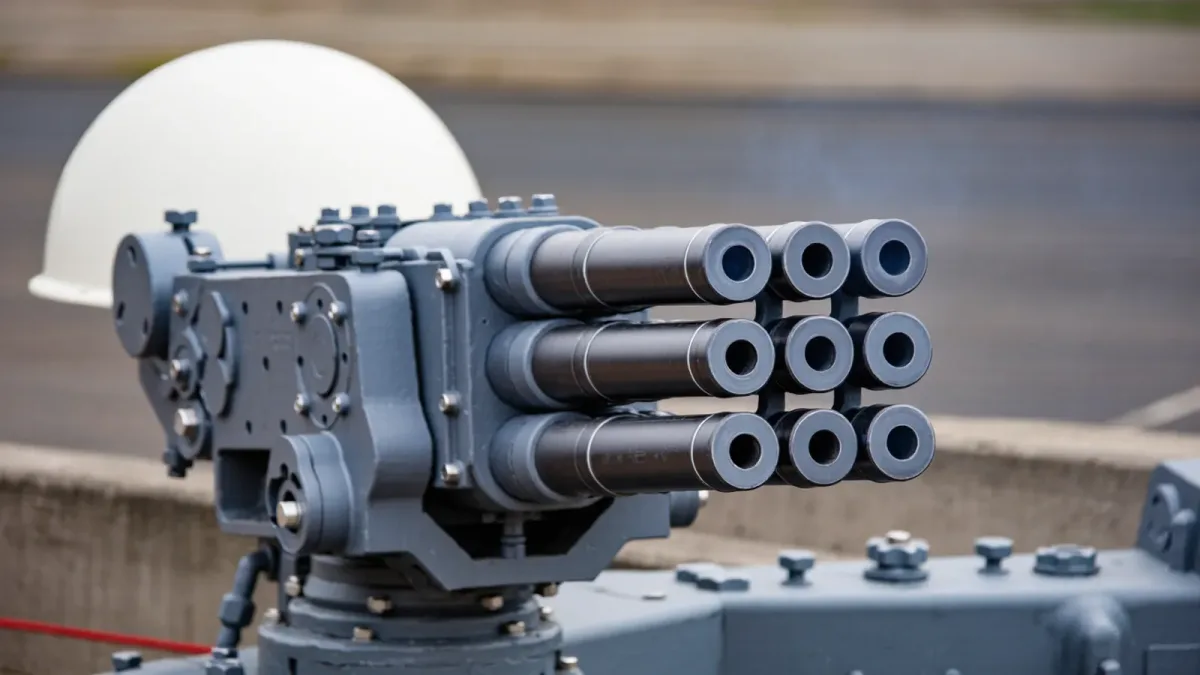
- Guns first. Gun systems return fire costing thousands of dollars per burst; the U.S. Army's C-RAM program exists for exactly the rocket-and-mortar end of the spectrum.
- Electronic attack. Jamming a drone's navigation link costs electricity, not rounds, and defeats entire raids rather than single airframes.
- Cheap guided effectors. Several Western programs since 2023 have pursued interceptor-class guidance at rocket-ammo prices; publicly announced unit-cost targets sit in the tens of thousands of dollars, which are program goals, not proven results.
- Directed energy. Laser demonstrators fielded for evaluation on Army and Navy platforms since the early 2020s promise cost per shot in the dollars-plus-fuel range, within claimed power and weather limits that manufacturers themselves state.
- Tiered assignment. Firing doctrine that reserves long-range interceptors for the targets only they can reach, and pushes everything cheaper down the layer stack.
None of these replaces the guided interceptor. They protect its magazine for the targets that justify it.
Does the expensive interceptor ever win the math?
Constantly — the ratio alone is the wrong scorecard. The correct question is the cost of the exchange against the value of what stands behind the target. A $4 million round that stops a strike on a packed urban block, an airbase, or a loaded amphibious ship is the cheapest money spent in the entire engagement chain. Attackers understand this, which is why raids mix cheap drones to drain the magazine with expensive missiles behind them to meet whatever magazine survives.
The interceptor's price tag is a magazine-depth problem first and an economics problem second.
That is the whole trade: defenders do not need a cheap answer to every target, they need a tiered answer where every target meets the cheapest effect that reliably kills it — and where the expensive rounds are still in the tubes when the expensive targets arrive.