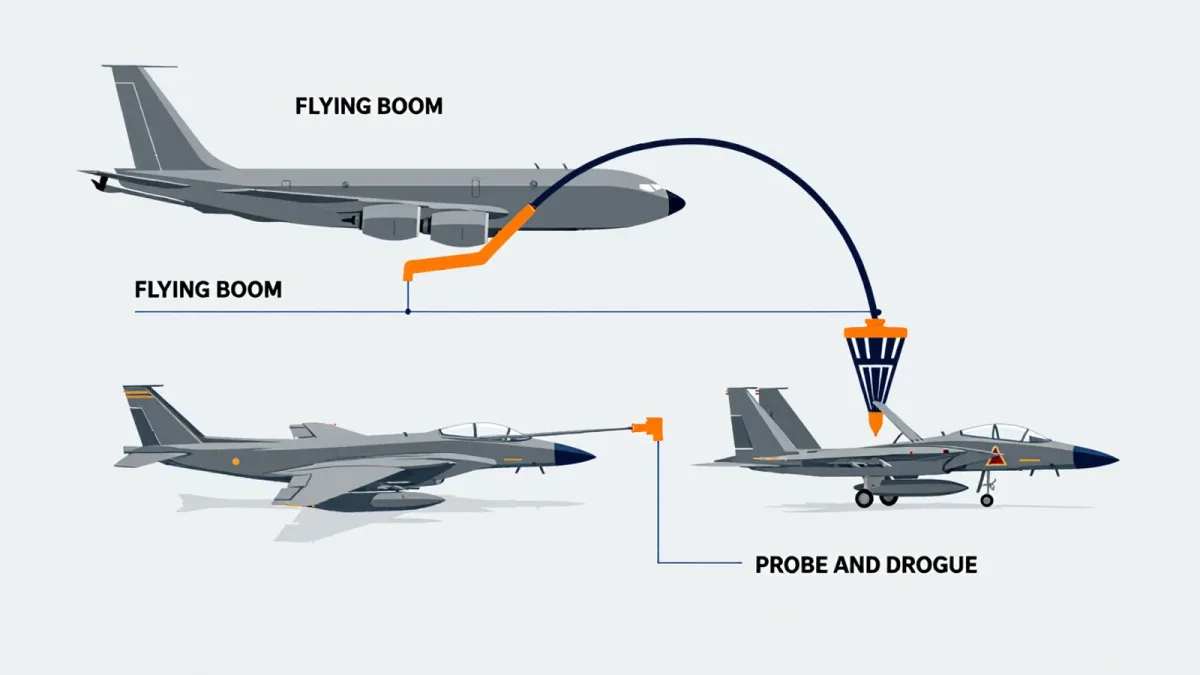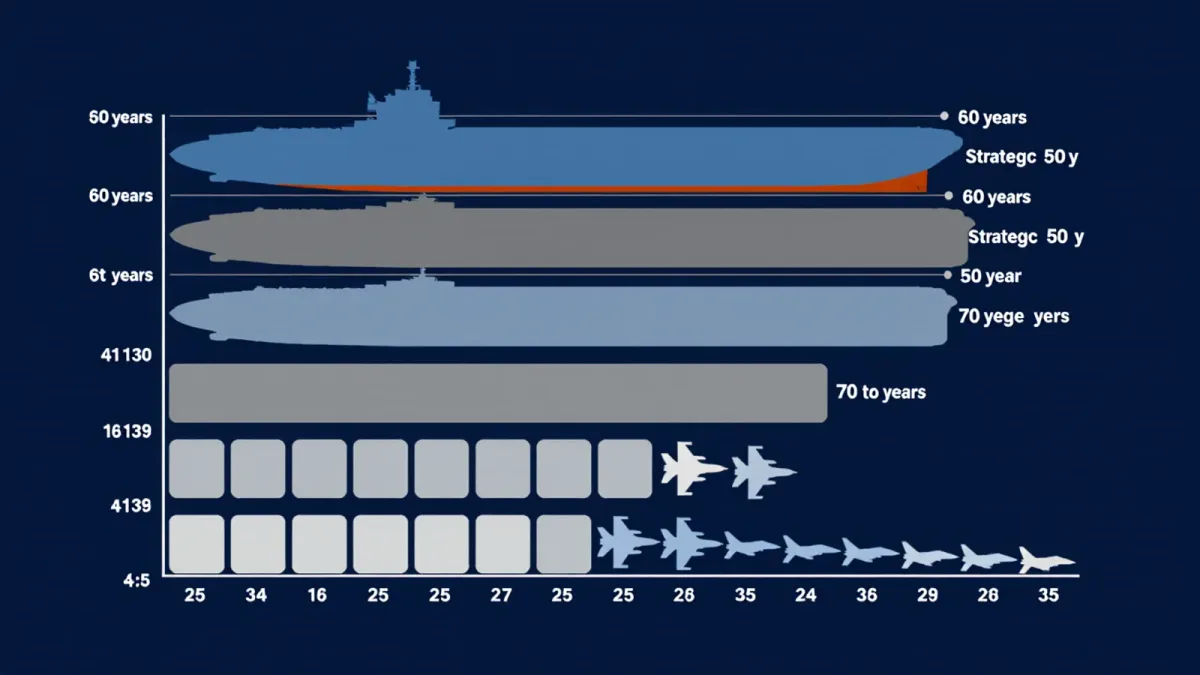
Transport and tanker fleets age faster than fighters because they fly more hours per airframe, get replaced less often, and attract less procurement attention — and the fleet data makes the pattern plain. Per Air Force fleet data cited in 2024, the KC-135 tanker force averages more than 60 years of age, making these mobility workhorses decades older than the average fighter they refuel.
The inversion is worth sitting with. A fleet built to move fuel, cargo, and people — the ordinary logistics that every combat operation consumes — is the oldest part of the aviation force, while the glamorous combat types get replacement programs, modernization fights, and headlines. The causes are structural, documented in service data and audit reports, and they compound year over year. None of them is a management accident.
What does the fleet data actually show?
The ages, all from Air Force fleet data and service announcements, line up like this:
| Fleet | Role | Age picture | Source |
|---|---|---|---|
| KC-135 | Tanker | Average above 60 years per 2024 data | Air Force fleet data |
| C-5M | Strategic airlift | Original airframes date to the late 1960s | Air Force fleet data |
| B-52 | Bomber | First flight 1952; service planned into the 2050s per 2021 re-engining decision | Air Force announcements |
| KC-10 | Tanker/transport | Retired September 2024 per service announcement | Air Force statements |
Fighters are not young either — the F-16 fleet averages decades of service — but the fighter force has an active replacement and modernization cycle: new types fielding, radar and software blocks flowing, and retirement waves scheduled. The mobility fleets show a thinner version of the same treatment: one new tanker type (the KC-46, itself delayed for years by fixes documented in GAO program assessments) and one new airlift type delivered decades ago (the C-17, whose production line closed in 2015 per Boeing and service figures).
Why do mobility aircraft burn through their hours faster?
Because their mission profile converts time into wear at a higher rate. A fighter flies hard but comparatively rarely; peacetime sortie rates are managed against training budgets. A tanker or transport flies constantly, and its wear comes from a distinctive source — landing cycles. Every aerial refueling orbit, every cargo run, every channel mission adds pressurization cycles and landing gear loads, and per the fatigue mechanics described in airframe engineering literature, it is the cycles, not the hours alone, that age a pressure vessel and its structure.
The usage also runs through freighted conditions fighters avoid. Mobility aircraft operate into bare-bones fields, in weather that cancels fighter training, on schedules driven by events rather than by sortie generation targets. Corrosion exposure, foreign-object damage risk, and maintenance performed far from home stations all follow, and GAO's sustainment work on mobility fleets has pointed to corrosion findings and parts demand as recurring cost and availability drivers on aged transports and tankers.
Why does replacement lag so badly for these fleets?
Three structural reasons, each visible in the procurement record.
- Economics of the mission, not the airframe. A transport or tanker's value is capacity, fuel offload, and operating cost. Existing airframes can be re-engined and re-avionics'd — the KC-135's 1980s re-engining, the C-5M upgrade — for a fraction of new-build cost per service program figures, so every replacement decision is delayed by a cheaper modernization option.
- Low procurement urgency in peacetime budgets. Fighters compete against adversary fighters; tankers compete for the same budget after the combat types are funded. When budgets tighten, mobility recapitalization slips first, a pattern visible across decades of defense budget documents.
- Small industrial base. Only a handful of manufacturers build large aircraft, and production lines for tankers and transports sell small quantities at high unit cost. The KC-46's documented development troubles, per GAO, show how thin that base makes recapitalization.
The KC-10 retirement sharpens the arithmetic: in September 2024 the Air Force removed one of its three major tanker types, per service announcements, leaving demand spread across an aging KC-135 fleet and a KC-46 fleet still climbing out of its fix cycle.
What does the age gap mean for the force?
The operational consequence is that the fleets enabling every deployment are the ones with the least slack. Per the availability mechanics GAO documents across aging fleets, decades-old airframes lose availability to corrosion, parts scarcity, and modification downtime, and a mobility fleet that loses availability loses sortie capacity on the routes that carry everything else. Unlike fighters, mobility aircraft cannot surge their way past a maintenance shortfall for long — their peacetime tasking already runs close to what the fleet can generate, which Air Mobility Command's own published statements about high operational demand have described for years.
How does the age gap interact with the availability problem?
The two compound into the central planning dilemma of the mobility fleets. Per GAO's sustainment framework, availability depends on flying-hour programs, parts, and depot capacity, and aged fleets tax all three at once: more corrosion findings per inspection, longer modification installations, and higher unscheduled removal rates. A decade-old fleet can absorb a lean year in the sustainment budget and recover. A sixty-year-old fleet converts the same lean year into a permanent availability haircut, because deferred work on old structure does not wait patiently — it becomes bigger work.
The KC-46's fix cycle, documented across GAO program assessments into 2024, added a second-order effect: recapitalization delivered new airframes slowly, so the KC-135 fleet carried the loading it was carrying when the KC-10 left. Demand did not pause while the replacement climbed its learning curve, and Air Mobility Command's published statements about sustained operational demand describe a force flying near its generated capacity rather than holding surge margin.
There is also a quiet risk-transfer effect. An aged tanker or transport is not a combat risk in the way an aged fighter is, so its problems never make threat briefings — but every fighter deployed overseas flies on fuel that these fleets moved, and every repair part in a forward theater arrived in one. That is the whole trade: the youngest-looking part of the air order of battle rests on the oldest aircraft in the inventory, and per the fleet data above, the age gap has been widening, not closing.