Defending an air base is a rings problem — standoff distance, fence line, sensors, quick reaction forces and terminal interceptors — and the gaps between rings are where the design is decided.
Denial posture tells an adversary the attack will not work at an acceptable cost — and each defensive layer multiplies the attacker's missiles while dividing its confidence.
A defense plan is a stack of numbered beliefs, and the exercise is the instrument built to find out which of them break first when an adversary is allowed to win.
Reserve batteries, radar sections, and homeland alert fighters are the layer of an air defense posture that makes depth affordable — at the cost of a longer mobilization clock.
Force posture is where a military keeps its people and equipment — and each runway, depot and family housing unit it builds abroad hardens a promise that treaties alone never could.
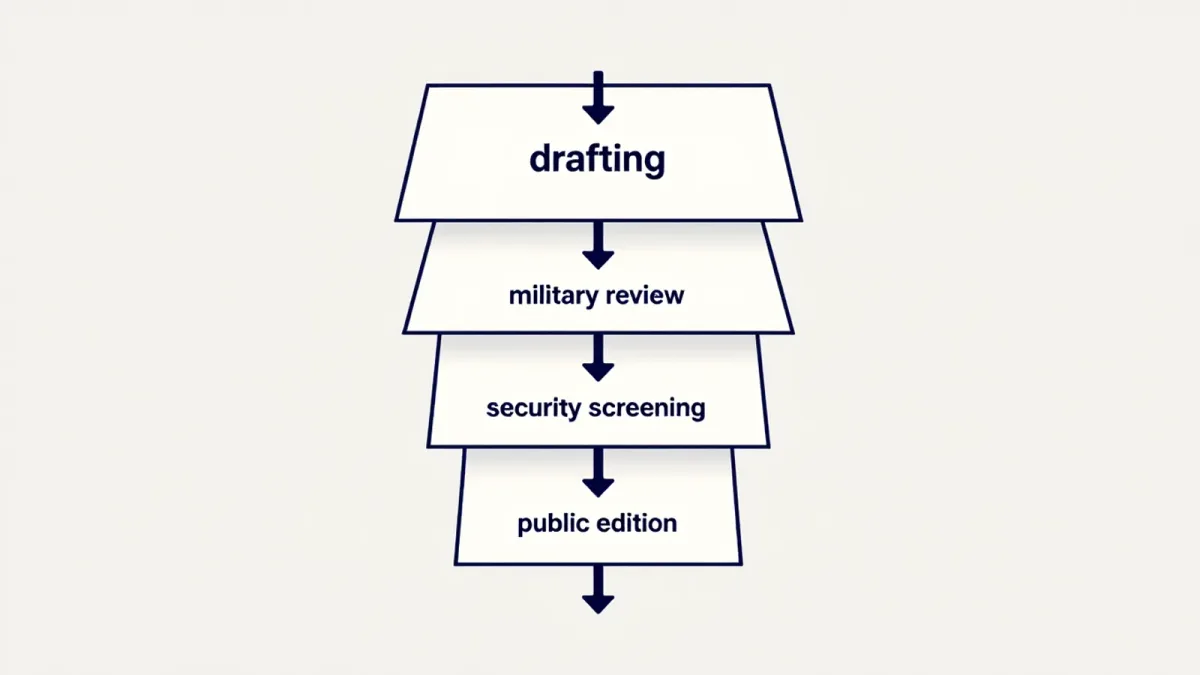
Every line of a defense white paper survived a fight between the staff who want to explain the strategy and the reviewers who decide what the public edition may contain.