A national defense review is a government-wide document that states threats, sets defense priorities, and reweights forces, posture and procurement against them — and it commands nothing by itself. The 2022 US National Defense Strategy, published by the Department of Defense in October 2022, is the reference case: 80 pages that name China as the pacing challenge and organize the department's priorities around a concept called integrated deterrence.
EDN News 12 is an online publication, not a broadcaster, and this piece covers documents and doctrine only — not advice on any decision a reader may face. Every claim below is traceable to a published government document or named analysis, with the confidence attached.
What actually triggers a defense review?
Three mechanisms recur across allied states: a statutory mandate, a change of government with a manifesto commitment, or a shock. The statutory type is the most durable. In the United States, the Quadrennial Defense Review was created by the National Defense Authorization Act for Fiscal Year 1997, which required the Department of Defense to produce a comprehensive review every four years; Congress later replaced the fixed cycle with flexibility in the National Defense Authorization Act for Fiscal Year 2022. The United Kingdom has no fixed legal cycle. Its 2021 review, titled Global Britain in a Competitive Age, was a political commitment of the Johnson government, published on 16 March 2021 alongside the integrated defense and foreign policy process. Reviews without a statute depend on whoever ordered them remaining in power.
Shocks have produced some of the fastest reviews on record. The 2022 NATO Strategic Concept, agreed by allied leaders at the Madrid summit on 29 June 2022, rewrote the alliance's threat language around Russia as "the most significant and direct threat" — language that followed Russia's February 2022 invasion of Ukraine. National reviews of the same period moved in the same direction within months.
What does the document actually contain?
Published reviews follow a recognizable skeleton, whatever the country. Open any recent example and you will find the same five load-bearing sections:
- Threat assessment. What the state believes threatens it, ranked. The 2022 US strategy's pacing logic — China first, Russia as the acute European threat, then Iran, North Korea and violent extremist organizations — is the cleanest current example of explicit prioritization.
- Strategic concept. The organizing idea. The US 2022 document's term was "integrated deterrence": aligning diplomatic, informational, military and economic tools so an adversary faces coordinated costs across domains, not just a military response.
- Force guidance. What gets built, kept, cut. The UK's 2021 review retired 30 Challenger 2 tanks in their upgrade program's favor and committed the Army to 148 Challenger 3 vehicles, per the published document — a swap of mass for modernization you can verify in a single sentence of the text.
- Posture and basing direction. Where forces sit. The UK review's "Indo-Pacific tilt" moved diplomatic and naval attention toward Asia, including the 2021 carrier strike group deployment.
- Investment lines. Money directions, rarely line-item budgets. The 2021 UK review set an ambition of at least 2.2 percent of GDP on defense; the budget act that followed is a separate legal instrument.
That last point is where readers most often misread a review. A review is direction, not appropriation.
Who writes it, and who can ignore it?
In the American case the Secretary of Defense owns the strategy, the military departments implement it, and Congress funds or refuses to fund its consequences. The separation is deliberate. Goldwater-Nichols reform of 1986 sharpened the Chairman of the Joint Chiefs' advisory role while leaving command authority with the President and Secretary — so a review's military content is advice, organized and documented, not an order anyone outside the Department must obey.
In parliamentary systems the writing is tighter and the enforcement looser. A UK integrated review is a government document; a change of government can shelve it. The 2021 review's tank decision, for instance, was revisited within two years by the same party's government — in March 2023 the UK announced it would lift the Challenger 3 commitment from 148 to 148 plus an increase in the planned fleet count reported as up to 253 vehicles, per the Ministry of Defence's announcement. That is the honest lesson of review-watching: documents bind their authors only as long as circumstances and politics allow.
How does a review differ from a threat assessment?
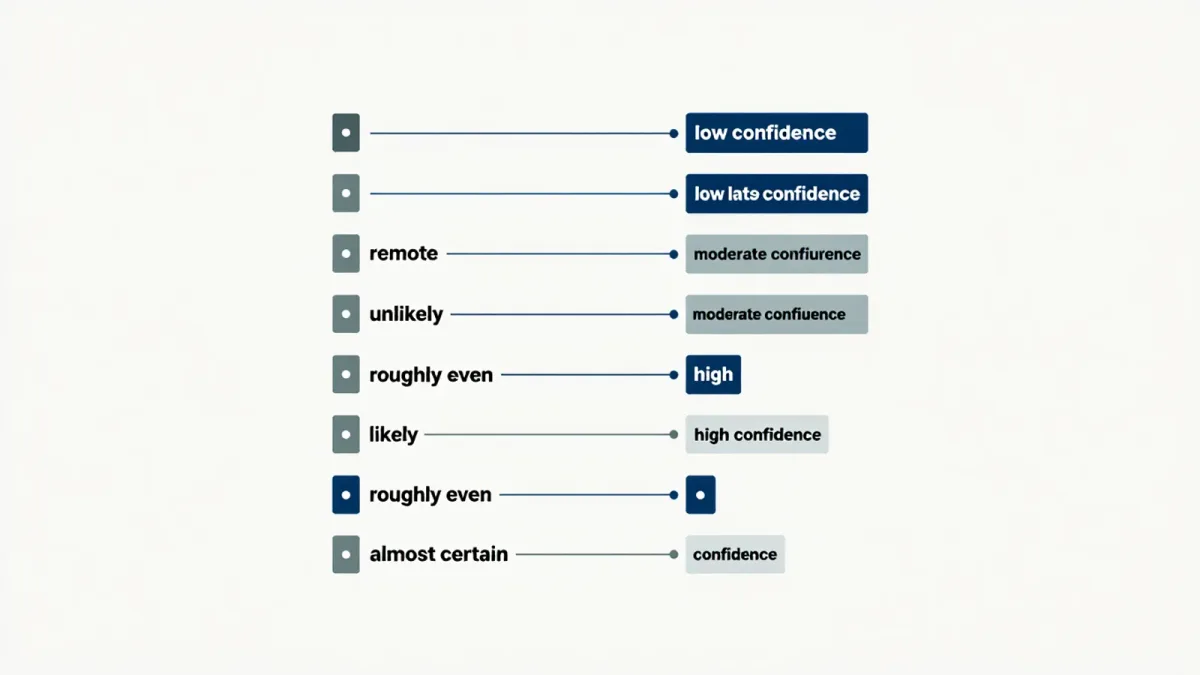
The two get conflated. A threat assessment — like the US intelligence community's Annual Threat Assessment produced by the Office of the Director of National Intelligence — is descriptive: it states what adversaries can do and intend, with confidence levels. A defense review is prescriptive: it takes a view on threat and then commits forces, posture and money against it. The review consumes the assessment; it is never a substitute for it. When you read a review claiming an adversary "will" do something by a date, note that estimative language is doing legal work — a capability claim and a policy prediction carry very different confidence, and serious documents mark the difference.
NATO's documents show the same split. The Strategic Concept is political guidance agreed by 32 governments (as of 2024); the alliance's defense planning process then translates it into national force commitments with their own negotiated timelines. Neither process publishes the classified underneath, which is why public reviews read as summaries of decisions already negotiated.
Do reviews actually change what militaries buy?
Sometimes, and the pattern of when is itself instructive. Reviews reliably move money across categories — the UK's 2021 pivot from mass armor toward cyber, space and the carrier program is a textbook reallocation — but they rarely invent new programs from nothing. The programs a review announces usually already exist inside the services as unfunded proposals waiting for a political sponsor; the review's function is to pick winners among them and give the choice cover. That is why service staffs treat reviews as opportunities first and threats second. The honest measure of a review's influence shows up two procurement cycles later, in which favored programs survived their first cost crisis and which were cancelled quietly. Historical examples cut both ways: the 1957 UK Defence White Paper famously cancelled a generation of crewed aircraft programs in favor of missiles, a judgment reversed over the following decade, while the 2018 US strategy's emphasis on great-power competition has visibly persisted through two administrations. Longevity, not announcement day, is the real test.
Why do reviews so often promise what budgets won't deliver?
Because the two run on different clocks. A review is written once, in weeks or months, by a team with a deadline. The budget process that funds its conclusions runs annually, in committee, against revenue politics. The recurring failure mode is a review that assumes real-terms growth a legislature later declines to grant. The UK's 2021 review again supplies the case study: its ~£24 billion four-year uplift, per the published document, was announced against a defense budget that subsequent inflation — particularly after February 2022 — eroded in real terms, a gap analysts at the International Institute for Strategic Studies and the House of Commons Library have documented in successive spending reports.
The reliable tell in any review is the verb tense around money. "Will invest" is an ambition; "has programmed" points to a funded line in an existing plan. Trained readers scan for the second and discount the first.
What should a reader actually take from one?
Treat a defense review as a statement of intent with a legal or political fuse attached. Check four things, in order: who is legally or politically on the hook for it; which threats it ranks and in what order; which force structures it retires, because retirements are the most credible commitments a review makes — cutting is harder to fake than promising; and whether the money lines exist in a budget document you can open. The 2022 US strategy, the UK's 2021 integrated review and NATO's 2022 Strategic Concept all reward exactly that reading, and all three are public.
That is the whole trade. The review is the map; the budget is the vehicle; and the legislature, not the document, holds the keys.