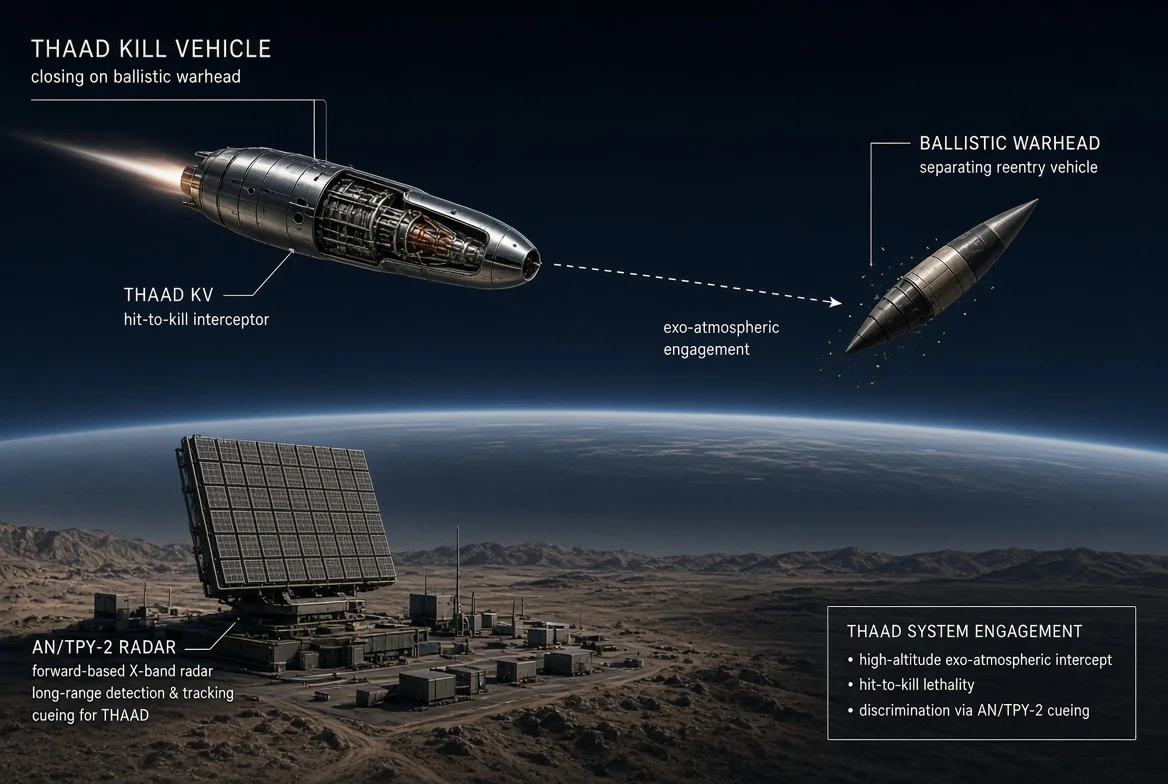
An airspace control order is the standing publication that tells every user of an operational sky where, when, and at what altitude that user may act. Its value shows in scale: NATO reported flying roughly 38,000 sorties during Operation Allied Force in 1999, and aircraft at that density do not share contested airspace safely by improvisation.
This publication explains the document itself, per the doctrine and accident records cited below — not the content of any current operation, which is not public.
What does an airspace control order actually contain?
Per Joint Publication 3-52, Joint Airspace Control — the Pentagon's public doctrine on the subject — an airspace control order publishes a dated set of airspace control measures: bounded volumes of airspace, each with defined lateral limits, altitudes, activation times, and the users entitled to operate inside them. It is a schedule as much as a map. A corridor may exist only from 0600 to 1200; a restricted zone may pulse on and off as raid waves pass through. Every measure is temporary until republished. security coverage.
Typical measures include:
- restricted operations zones that keep nonparticipating aircraft out of a missile engagement area
- transit corridors and routes for strike, support, and unmanned aircraft
- altitude reservations for tankers orbiting or surveillance platforms holding station
- special use airspace carved out for tests and exercises
- reference grids, of the kind US joint publications describe for weapon engagement zones, that let one short call shift responsibility for a whole volume
None of these measures directs anyone to shoot or fly. They define where competing activities are separated, and by how much.
Who writes it, and who has to comply?
The joint force commander designates an airspace control authority, and per JP 3-52 that authority — not any single component's operations staff — owns the order. In a combined operation the function sits in a combined air operations center, where partner nations' airspace managers work the same publication cycle and reconcile national systems that were never designed to interlock.
Compliance is the point. An airspace measure that a strike wing ignores is not a suggestion declined; it is a volume in which the battery crew outside it will, by design, treat uncorrelated traffic as a threat unless cued otherwise. Doctrine states the consequence plainly: aircraft operating outside published measures accept the risk posed by friendly systems, and commands enforce the order through tasking and post-mission review.
One boundary matters for American readers. A military airspace control order governs an operational area; it does not replace civil control of national airspace. In peacetime the United States allocates airspace through FAA regulations and published procedures — the FAA's aeronautical publications are the civilian counterpart of the same idea. Same geometry, different customer.
Why can't a battery crew and a transiting jet sort it out themselves?
They cannot, because the two sides of the encounter measure success differently. The crew's engagement geometry assumes that everything inside the battery's zone which fails identification is a target; the jet's routing assumes that everything on its corridor is friendly. Neither the cockpit nor the combat post can see the other's plan, and a radio call made mid-event settles an identity question, not a geometry one.
JP 3-52 frames the alternatives as positive control — a controller tracks and clears each aircraft — and procedural control, where published measures do the separating without anyone talking. Most real systems mix the two: positive control near defended points, procedural control across the rest of the volume. The order is what makes procedural control possible, because it converts two private plans into one public one.
That is the whole trade. Talk is cheap at planning speed and expensive at engagement speed.
How does it differ from the air tasking order?
The two documents come out of the same cycle and blur easily. The short version: the air tasking order says who flies what mission when; the airspace control order says where the sky is available and how it is subdivided while they do it.
| Product | Question it answers | Owner | Cadence |
|---|---|---|---|
| Air tasking order | Which units fly which missions, in what sequence | Joint air operations center | Fixed daily cycle |
| Airspace control order | Which airspace measures are active, where, and when | Airspace control authority | Republished as required, with amendments |
| Airspace control plan | How airspace control is organized across the theater | Joint force commander, via the authority | Changes rarely |
Per JP 3-52 the airspace order updates faster than the tasking order because airspace measures must track the operation hour by hour, while missions are built in deliberate cycles. The plan underneath both is the slowest-moving layer: it decides who even holds the pen.
What happens when the order is late, wrong, or ignored?
The documented failure mode is fratricide. On April 14, 1994, two US Air Force F-15s shot down two US Army UH-60 Black Hawks over the northern Iraq no-fly zone, killing all 26 people aboard, per the official American investigation. The report traced the engagement through Operation Provide Comfort's patchwork — aircraft of different services and nations, multiple coordination mechanisms, and identification procedures that did not interlock in the moment they were needed.
The lesson that stuck was architectural rather than personal: coordination that lives in ad hoc habits collapses under combat load. The reforms that followed pushed toward a single airspace control authority and a single published order, per the investigation's recommendations and the doctrine that succeeded them.
Details of any current operation's airspace arrangements are not public, and wartime information generally is contested and hard to verify. Publicly available sources do not establish the day-to-day content of any live airspace control order.
What does an airspace control order not do?
It assigns no targets and directs no engagements; the tasking order does that. It classifies no aircraft; identification procedures and the crews and controllers who run them do that. It does not supersede the law of armed conflict. And it cannot deconflict an enemy — it coordinates friendly and allied users, which is precisely why hostile traffic inside a published measure is treated as an operational problem rather than a paperwork one.
For an air-defense audience, the order deserves the same attention as any radar or missile. A battery's advertised range is a manufacturer's datasheet claim, and the airspace measure is part of what decides whether that range can ever lawfully and safely be used.