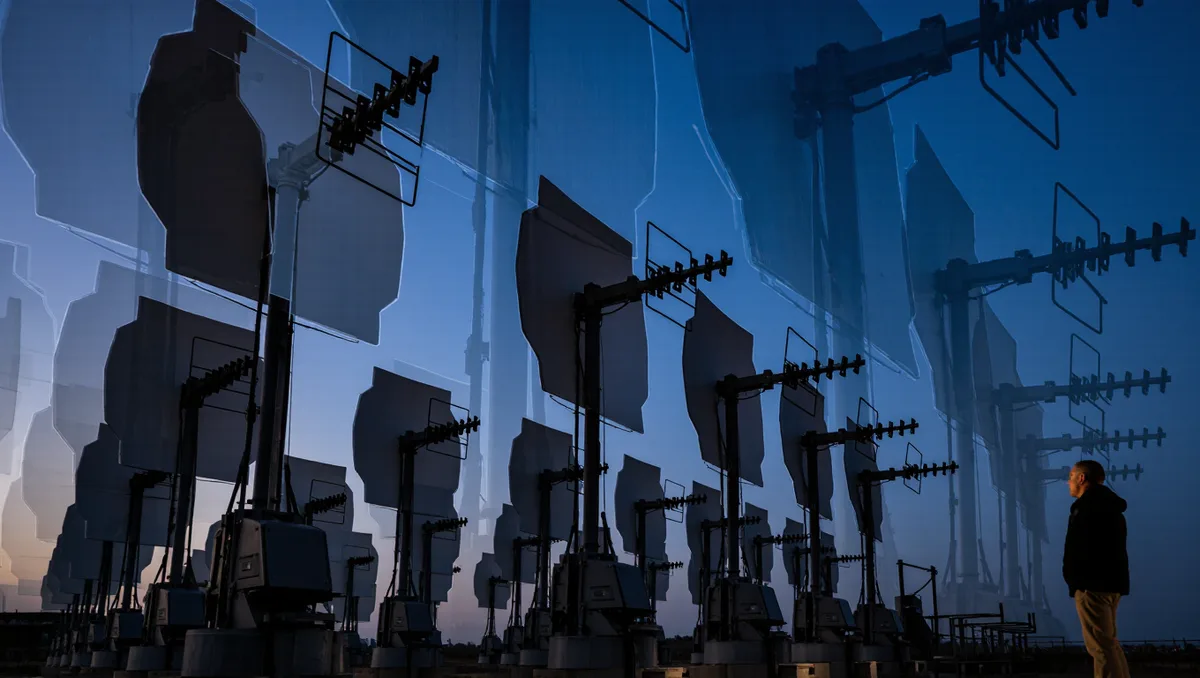
Military job titles hide as much as they show. A soldier in the Army's air defense branch does not just wait for trouble. The day runs on watch shifts, radar screens, checks, and drills. It is all built around one duty. Keep hostile planes and missiles from getting through.
The Army labels each job a Military Occupational Specialty, or MOS. Its air defense jobs share one numbered series. The best public window into this work is the Army's own recruiting site. It describes each air defense job in plain words. Here is what those pages say, and what they mean in a normal week. For related coverage, see Here is why an air defense radar cannot see over the horizon, and how defenders fix it.
Four Jobs, One Sky-Watching Branch
The Air Defense Artillery Branch is the part of the U.S. Army that fires anti-aircraft weapons. That includes surface-to-air missiles, according to Wikipedia. It fields the Patriot missile system, THAAD, and the Avenger, which fires the Stinger missile. Each system needs people to run it. Each crew post has its own job label.
- Patriot Fire Control Enhanced Operator or Maintainer: according to the Army's job page, this soldier runs and maintains the four major parts of the Patriot Fire Control system. The soldier identifies, tracks, and engages threats with one of the world's top interceptor missile systems.
- Air Defense Enhanced Early Warning System Operator: the Army says in its job description that this soldier weighs and shares data on incoming enemy air and missile attacks. The goal is early detection that enables threat destruction.
- Air Defense Battle Management System Operator: the Army says this soldier provides key situational awareness, threat detection, and early warnings from airspace. That helps protect against air and missile attacks.
- Air and Missile Defense Crewmember: according to the Army, this soldier runs and maintains surface-to-air weapons systems. Those systems defend against cruise missiles and other threats.
What the Day Actually Looks Like
Official duties turn into a steady rhythm. In the Patriot system, Wikipedia calls the engagement control station the nerve center of the firing battery. Operators sit at its screens and watch the radar picture. Alert states set the pace. On watch, they track contacts, run checklists, and pass reports up the chain. When the alarm changes, the same screens shift from routine to action. This connects to our earlier piece, The Patriot system explained: what its radar and interceptors actually do, per official documents.
Maintenance fills much of the rest of the day. The Army pairs operating with maintaining in its job titles. The gear demands it. Wikipedia notes that Patriot operators can move, aim, or stow launchers by remote link. They can also run checks and fire missiles through that link. Keeping the link, the radar, and the power plants healthy is daily work. A system that cannot wake up is not a defense at all.
How You Learn the Job
Every new soldier starts the same way. Recruits finish Basic Combat Training first. Then they train for their specific job, according to the Army's site. For this branch, that training happens at the Air Defense Artillery School. Wikipedia records that the school moved from Fort Bliss to Fort Sill in 2010. After training, a soldier joins a battery. There the crew runs the same drills until the steps flow without thought.
The Skills That Repeat Every Day
Read the job pages side by side and a pattern appears. Early detection shows up in nearly every one. So do clear communication and situational awareness. The work suits people who stay calm while tracking fast contacts. It also suits those who treat checklists with care. Steady hands matter for maintenance. Clear radio speech matters for everything else. A fumbled report wastes the very seconds the system exists to buy.
Conclusion
So what does an air defense artillery soldier do day to day? They watch, report, maintain, and rehearse. Then, if ever needed, they engage. The branch motto, First To Fire, is recorded by Wikipedia, and it sums up the promise. Most days stay quiet. That quiet is the point. The watching never stops, so the shooting rarely has to start.