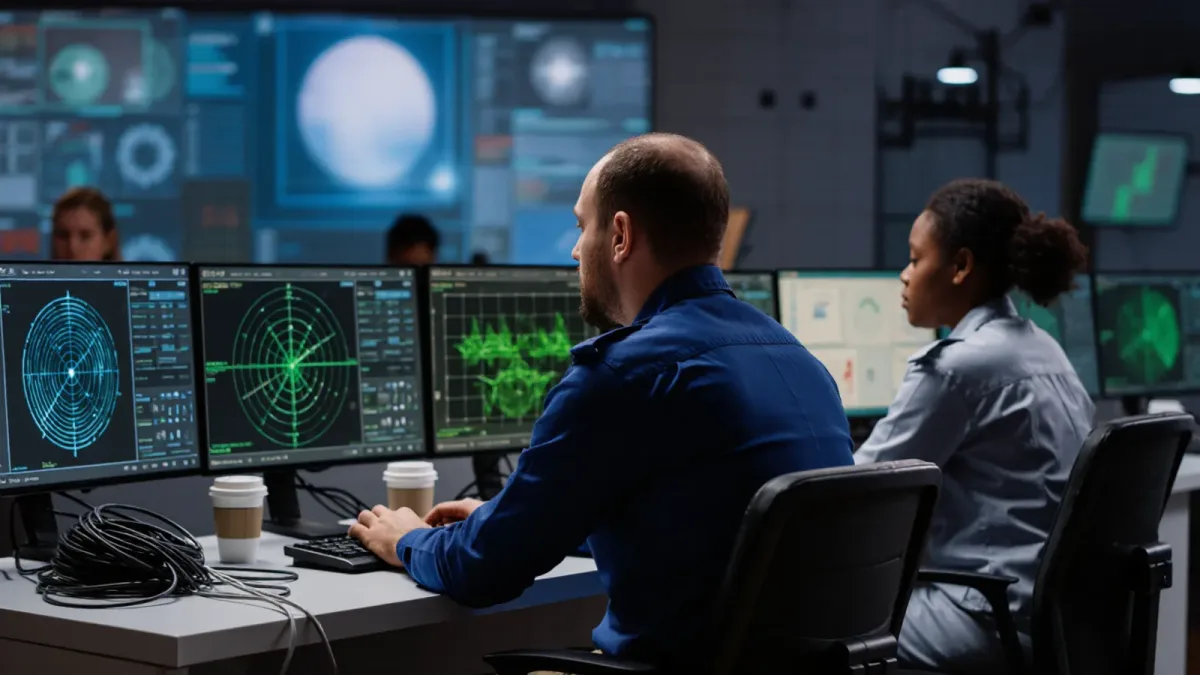
Somewhere under every guarded sky sits a room with no windows. Screens cover the walls. Radios murmur all day. Every plane within reach of the sensors shows up as a small moving symbol. This is an air defense operations center. Here, scattered radar data becomes one picture, and one set of decisions.
Open sources cannot show you the inside of one exact room. Honest writing should not pretend otherwise. But the building blocks are public: what goes in, who sits there, and what comes out. Put the blocks together, and the room makes sense.
Why One Room Needs Many Sensors
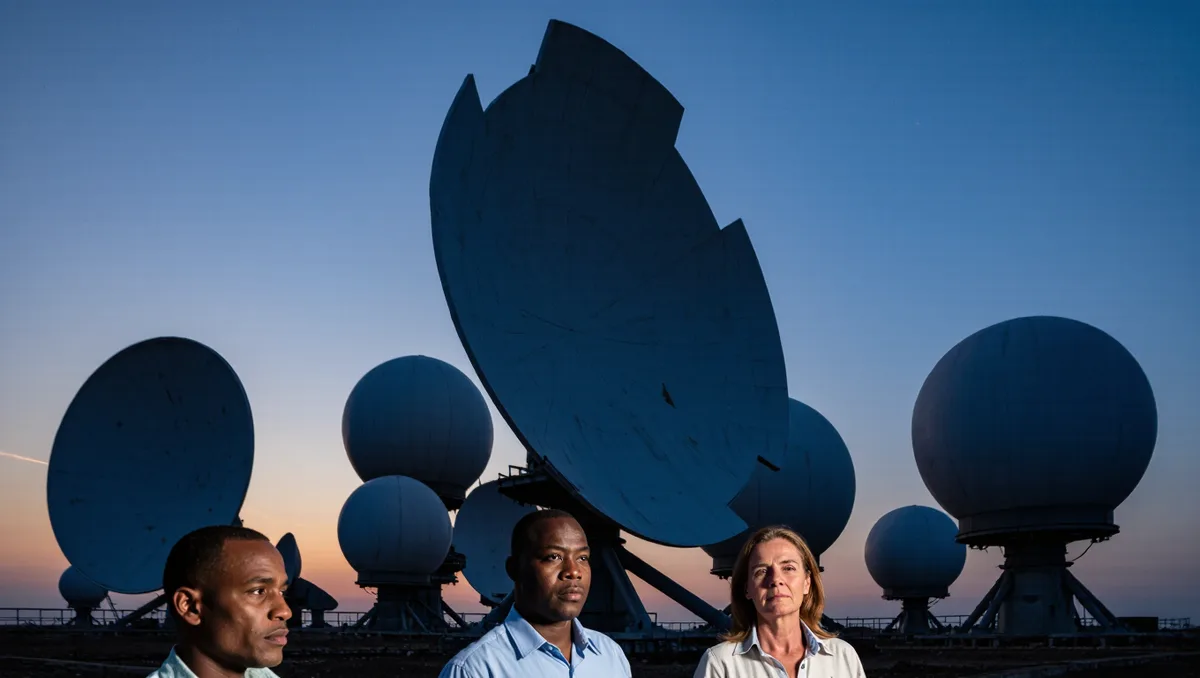
One radar is one pair of eyes. Hills hide valleys. Distance weakens the return. Every design favors some targets over others. So air defense never trusts a single sensor. Wikipedia's overview describes air defense as more than weapons. It includes the sensor systems and the command and control links tied to them. The room exists to merge them all into one view.
The NATO nations made the idea formal long ago. Wikipedia records that NATO defined an air defence ground environment. In its words, that is a network of ground radar sites and command and control centres. They are used for the tactical control of air defense operations. That network is the raw food of an operations center. It takes feeds from many sites and merges them into one. Readers following this should also see How a layered integrated air defense system turns scattered sensors into one engagement decision.
The Picture on the Wall
Radar data alone is just noise. Someone has to shape it. Radar systems use electromagnetic waves to find the range, height, direction, or speed of aircraft, according to Wikipedia. They give warning during defensive operations. Inside the center, that data becomes tracks. A track is a numbered symbol with a past, a heading, and a flag. The flag says identified, unknown, or hostile. The room's first product is this shared picture. Every later choice hangs on it. Nothing in the room guesses. Every call rests on data from the sensors. When the picture is good, the fight is half won.
A Small Version You Can Picture
To grasp the room, shrink it to one battery. In the Patriot system, Wikipedia calls the engagement control station the nerve center of the firing battery. It holds the weapons control computer, the radios, and two-person stations. Those stations are the link between people and machine. Operators watch contacts there. Through a data link, they can move, aim, or stow launchers by remote. They can also run checks on the gear.
Scale up one level, and the pattern repeats. A Patriot battalion also fields an Information Coordination Central. Wikipedia describes it as a command station that coordinates launches across the battalion. An operations center runs the same logic on a bigger scale. Watch sections build tracks. ID sections clear the unknowns. Weapons sections pair the threats left over with the right shooters.
Watching a Whole Continent
The largest example is public knowledge. NORAD is the North American Aerospace Defense Command. It was set up in 1957, according to Wikipedia, and is based at Peterson Space Force Base in Colorado. It splits the continent into three regions: Alaska, Canada, and the lower United States. It also keeps a backup command center in the Cheyenne Mountain Complex. Wikipedia calls its command center at Peterson a central collection and coordination point. It gathers data from a worldwide system of sensors. That sentence is the job of every air defense operations center, written large. The scale differs. The shape stays the same.
Conclusion
An air defense operations center is a filtering machine. Thousands of contacts flow in. Almost all are harmless. The room's work is to prove that early. The screens, the sections, and the shifts all serve one result. When a real threat shows up, no one starts from zero. The sky is watched so that surprise never gets a free shot. This connects to our earlier piece, Here is why an air defense radar cannot see over the horizon, and how defenders fix it.