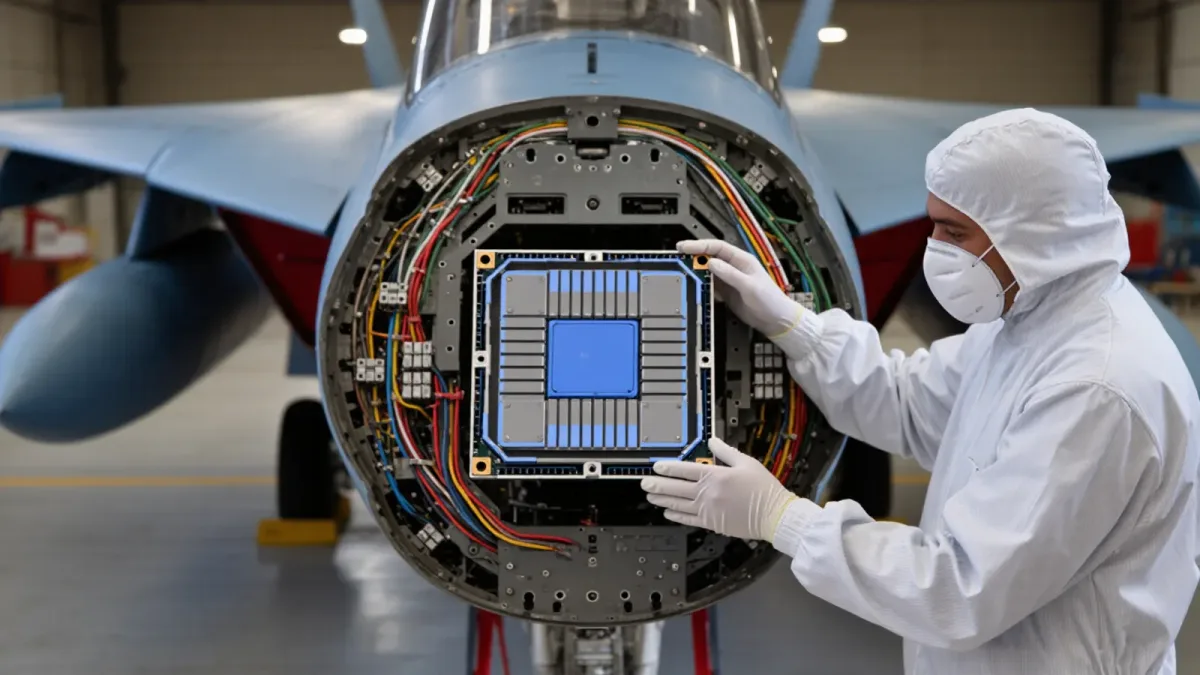
Avionics obsolescence forces mid-life upgrades because commercial electronics go out of production years before an airframe is halfway through its life, and an aircraft whose radar, computers, and displays can no longer be repaired is obsolete no matter how sound its structure is. The clearest public example is the F-16: in 2019 the US Air Force announced it would extend the fleet to 12,000 flight hours and fit the APG-83 AESA radar — machinery from the 2020s installed on an airframe designed in the 1970s, kept flying because its electronics kept being replaced rather than its structure.
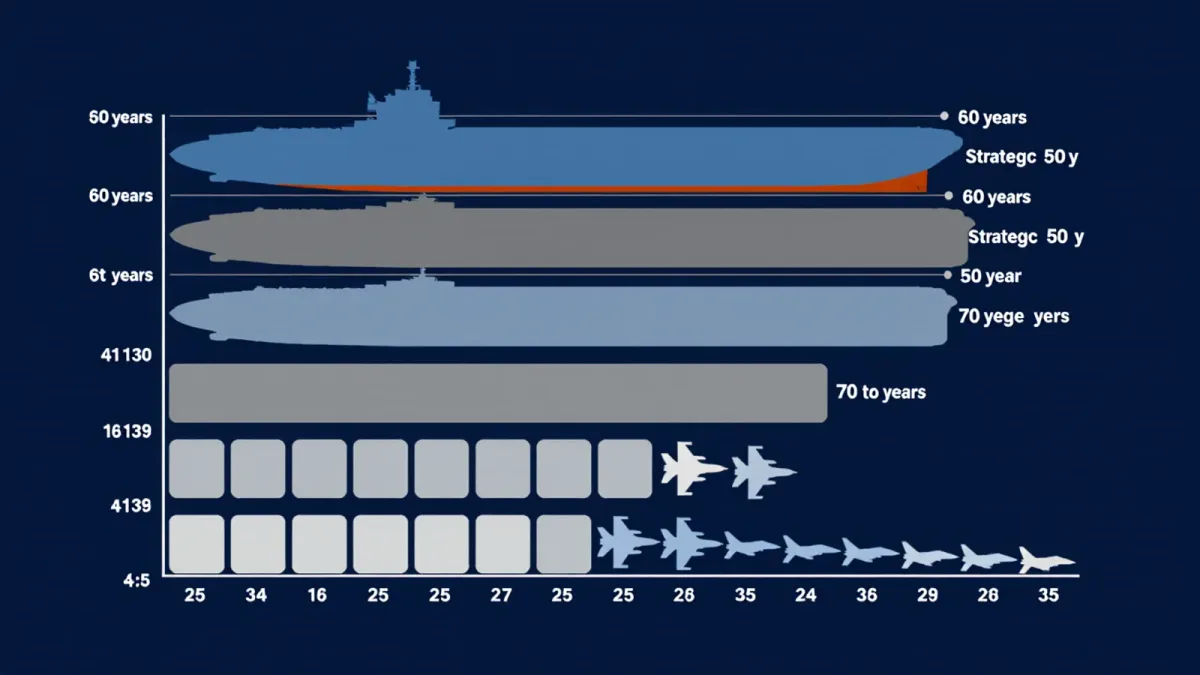
The gap between the two clocks — a 30-to-50-year airframe life against commercial component runs that can end within two to five years — is the engine of the entire mid-life upgrade industry, and this explainer walks through how it works, using only public documents and named published sources. EDN News 12 is an online publication, not a broadcaster, and nothing here is procurement or engineering advice.
What is diminishing manufacturing sources, and why does it hit avionics first?
The formal term in US practice is diminishing manufacturing sources and material shortages, usually shortened to DMSMS: the loss of the ability to procure a part or the raw material for it, because the manufacturer stopped producing it. The Defense Department maintains a dedicated program office to track these losses, publish alerts, and coordinate responses across services — institutional proof that the problem is chronic rather than exceptional.
Avionics take the brunt because they are the most commercial part of a military aircraft. A processor, memory chip, display panel, or power supply inside a mission computer comes from the same production lines that serve phones, cars, and industrial controls, and those lines retool for the next generation on commercial schedules. A wing spar has one customer and decades of guaranteed demand; a line-replaceable avionics module has a consumer market that forgets it in three years.
Why do electronics age faster than airframes?
Two clocks run at once. The physical clock — fatigue, corrosion, hard landings — is managed through inspections and can be extended by repair, which is why service life extension programs exist at all. The electronic clock is different: a part does not wear out when it becomes unavailable, it simply becomes unprocurable, and the fleet's stock of spares becomes a countdown timer. An aircraft can be structurally young and logistically ancient at the same moment.
The economics compound the physics. Manufacturers discontinue a component when its market shrinks below production viability, and military demand alone rarely keeps a commercial line open. The services then face escalating prices for dwindling stock — GAO reporting on sustainment has repeatedly flagged parts shortages and long repair turnaround as leading availability killers — until replacement, rather than repair, becomes the only economic answer.
How is the timing of a mid-life upgrade chosen?
The upgrade window is usually chosen where three curves intersect: the airframe's remaining certified life, the exhaustion of original-equipment spares, and a major depot induction that already has the aircraft opened up. Induction timing matters because structural work and avionics installation share the same hangar labor; bundling a radar swap and a new mission computer into a scheduled heavy-maintenance visit costs far less than a dedicated stand-down.
Threat justifications arrive on top of the logistics. AESA radars, modern processors, and new electronic warfare suites are sold inside the Pentagon as answers to specific threat developments, and budget documents justify the spend on those grounds. But the calendar underneath is set by obsolescence: by the time a fleet's fourth decade arrives, the choice is not whether to modernize the electronics but whether the aircraft will fly at all without new ones.
What does a mid-life upgrade actually change?
Publicly documented upgrades show a consistent pattern: sensors, computing, and sometimes engines are replaced while structure, fuel system, and much of the airframe carry on. The table collects examples the services have announced in public documents.
| Aircraft | Original design era | What was aging out | Announced mid-life fix |
|---|---|---|---|
| F-16C/D | 1970s design, 1980s production | Original mechanically scanned radar and early mission computers | APG-83 AESA radar and service life extension to 12,000 flight hours, announced 2019 |
| F-15C/E | 1970s design | Mechanically scanned radar architecture | APG-82(V)1 AESA radar under the Radar Modernization Program, fielded through the late 2010s |
| B-52H | 1950s design, 1960s delivery | TF33 engines long out of modern production; dated avionics architecture | F130 re-engining selected in 2021, creating the B-52J, with modern radar and cockpit work alongside |
Each row carries the same signature: the airframe survives, the electronics do not. Manufacturers are the attributed sources of their own equipment claims — Raytheon/RTX on the APG-83 and APG-82, Boeing on the B-52 work — and no independent open-source test data validates the full performance of any of these systems, a caveat the manufacturers' own marketing does not always volunteer.
Why not just stockpile parts instead of upgrading?
Stockpiling works for a while, and it is the first response every sustainment organization reaches for: last-time buys, cannibalization economies, and careful husbandry of a finite spare pool. But a stockpile is a countdown, not a solution, and the math turns hostile as the fleet ages. Consumption is certain — every module eventually fails — while the resupply is zero, so each year of operation drains the pool and raises the probability that a single failed card grounds an airframe with no repair path at all.
The cost curve also inverts. Early in a discontinuation, last-time buys are cheap; later, aftermarket recreations and reverse engineering carry premium prices per unit; finally, only full redesign remains, which is the most expensive option of all. By the time the fleet needs a redesign of several line-replaceable modules, the incremental cost of installing a modern radar, mission computer, and displays instead — technology a generation newer, in boxes still supported by their manufacturers — stops looking extravagant and starts looking like the cheap option.
What happens between upgrades: the obsolescence-management layer?
Around the headline upgrades, sustainment organizations run the quieter craft of keeping old electronics alive. The toolkit is documented in public DMSMS guidance: last-time buys that stockpile a discontinued part in one large order, aftermarket and reverse-engineering sources that recreate obsolete components, emulation that substitutes modern silicon for dead designs, and planned redesigns of line-replaceable modules before the spares run dry.
This work is never finished, and it is priced in. Sustainment budgeting treats obsolescence management as a recurring cost of operating any fleet whose design predates its components' commercial world — which is to say, every fleet. Public GAO sustainment reporting consistently puts spare parts availability among the top drivers of aircraft availability, and obsolescence is a principal reason parts become unavailable in the first place.
An airframe is retired when its structure fails, its threat margin fails, or its parts supply fails. The parts supply usually fails first.
How should readers judge mid-life upgrade claims?
Three disciplines apply. First, separate the airframe claim from the sensor claim: "the fleet flies to 2040" is a structural certification question, while "the radar doubles detection range" is a manufacturer's figure unless an independent source confirms it. Second, check whether the upgrade bundles obsolescence relief with capability — most do both, and the budget line usually hides which motive dominates. Third, watch the schedule record: GAO program assessments have documented repeatedly that modernization programs slip and cost-grow, so an announced retrofit date is an opening bid, not a delivery promise.
Publicly available sources do not establish, for most upgraded fleets, the share of operating cost attributable purely to obsolescence management, and honest analysis marks that gap rather than filling it with estimates. What the record does establish is directional and sufficient: components will keep dying on commercial schedules, airframes will keep living on military ones, and the mid-life upgrade will keep existing because the gap between those clocks has never closed.