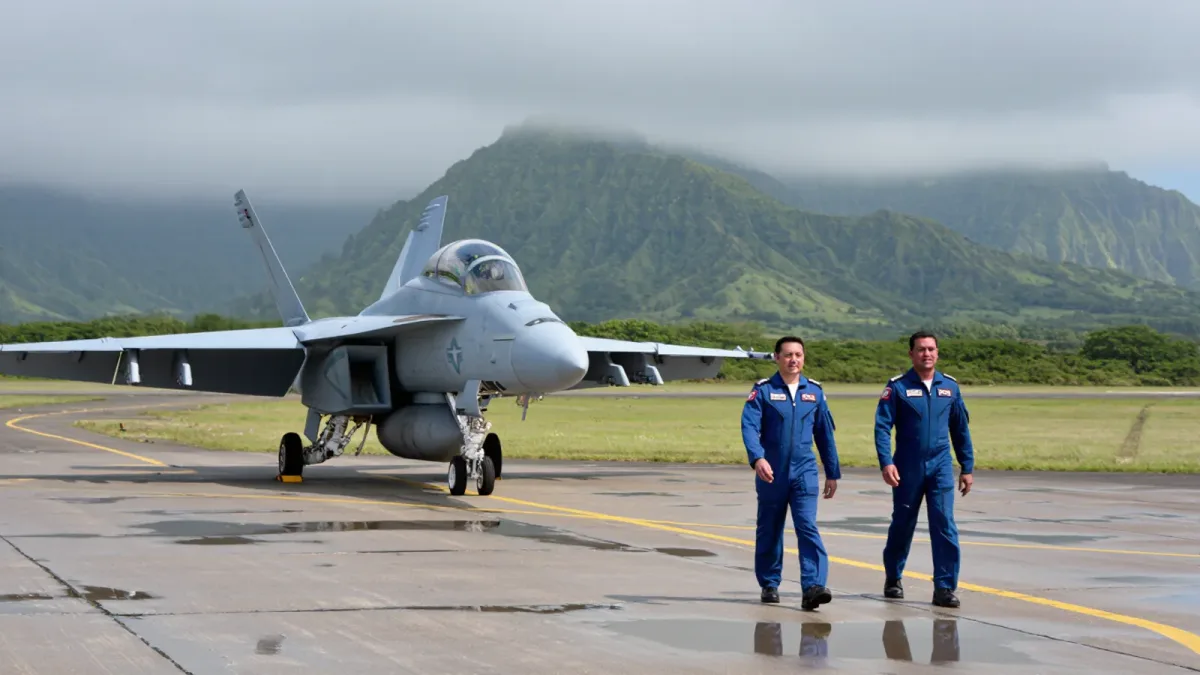
Red Flag-Nellis 26-1 concluded on February 13 after two weeks of advanced air combat training at Nellis Air Force Base, Nevada, and per Air Combat Command the exercise was led for the first time by the 325th Fighter Wing from Tyndall, whose F-22 Raptors anchored a force that included US Air Force and Marine Corps aircraft plus Australian and British participants flying day and night sorties.
The exercise ran February 2–13, 2026, per ACC's coverage and the Australian Department of Defence deployment announcement of February 2. This publication is an online outlet, not a broadcaster, and everything below is drawn from official service releases; the exercise's detailed threat simulations and engagement outcomes are not published, and we do not reconstruct them.
Why does Red Flag matter for fourth- and fifth-generation mixing?
Red Flag exists to give aircrews their first ten combat-like sorties in a training environment instead of a real one, and the mechanism is a full air tasking order: strikers, escorts, tankers, electronic warfare aircraft and a competing opposing force flown under realistic rules. Per ACC, the 26-1 force mixed F-22s, F-35As and F-16s from US and allied squadrons, which forces fifth-generation sensor data into fourth-generation cockpits and back — the integration problem every recent conflict has underlined.
Having the 325th Fighter Wing lead is the notable change. The Tyndall wing trains every US F-22 pilot, so its flag command puts the Raptor community's integration doctrine — how stealth aircraft cue, and are cued by, non-stealthy shooters — at the center of the exercise rather than at its edge.
What did the allies bring, and what was Bamboo Eagle?
Australia's contribution was announced by its Department of Defence on February 2, 2026, and per that release Australian aircrew also supported Bamboo Eagle 26-1, a concurrent experiment built around contested logistics and long-range air combat in the same Nevada ranges. The United Kingdom participated as well, per ACC's reporting on the exercise, keeping the US–Australia–UK training lane active alongside the wider Red Flag structure.
Night flying was a stated feature, with ACC imagery showing a night sortie launch on February 9. That matters because a large share of modern engagement geometry — tanker rendezvous, identification procedures, missile employment envelopes — is flown after dark, and Red Flag is where aircrews fly those patterns under exertion and radio load rather than in a syllabus sortie.
What the exercise does not tell you
Official releases describe participation and purpose, not results. Per ACC, hundreds of airmen supported each night launch cycle, but no engagement statistics, loss tallies or tactic assessments are published — wartime-style claims are absent by design in a training context, and the honest reading of Red Flag is structural: who flew, against what kind of problem, and who commanded. That is the whole trade, and it is why the 26-1 lead by the F-22 training wing is the detail worth keeping.