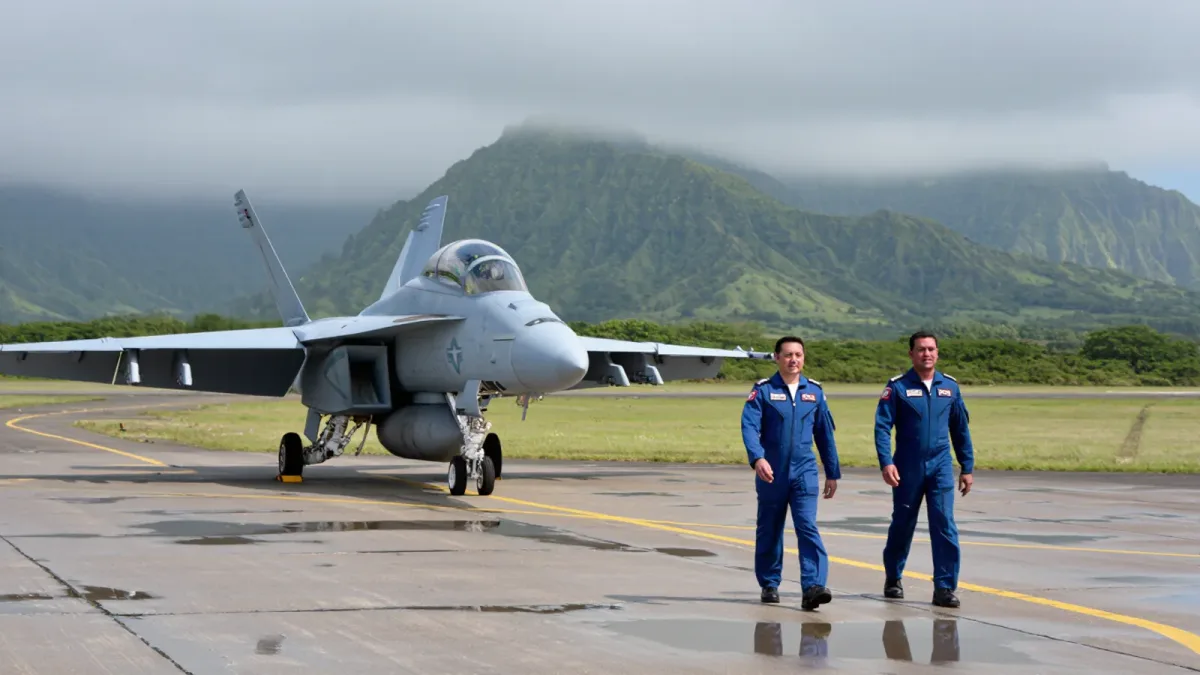
Exercise Sentry Aloha 26-1 is underway over Hawaii, and the numbers on the Hawaii Department of Defense announcement are the story: at least 41 aircraft from seven participating units are flying large-force air-to-air training from Joint Base Pearl Harbor-Hickam between January 14 and 28, 2026, hosted by the Hawaii Air National Guard's 154th Wing.
This publication is an online outlet covering air defense and military aviation, not a broadcaster, and it drafts from official releases only. The details below come from the Hawaii Department of Defense and Air National Guard announcements; exercise internals such as specific tactics or engagement results are not published and we do not speculate about them.
What is Sentry Aloha actually training?
Sentry Aloha is the 154th Wing's recurring fighter exercise, and its stated purpose per the Hawaii DoD release is demonstrating the wing's ability to lead large-force employment operations — many aircraft, mixed types, one airpicture. That is a specific skill: a mission commander has to mass fighters from different squadrons, with different datalinks and radios, into a coherent package against a live opposing force flying from the same base.
For the visiting units, the value is sorties against dissimilar aircraft that their home station cannot replicate. For the host, it is leadership reps at scale. The exercise series has historically paired Hawaii's F-22 Raptors with visiting fourth- and fifth-generation fighters, though the 2026 participant list by type is not broken out in the release.
Who is flying, and why does the noise matter?
The Hawaii DoD announcement lists participants from multiple states converging on Joint Base Pearl Harbor-Hickam for the three-week window, with possible short delays to commercial air traffic at Honolulu as fighter formations mix with civil traffic. The 154th Wing sits inside one of the busiest airspace segments in the United States, which is precisely why it is useful: the exercise trains combat airpower inside a real, congested traffic environment rather than a restricted range.
A separate public advisory from Marine Corps Base Hawaii lists a secondary phase at Marine Corps Air Station Kaneohe Bay on January 20–23, 2026, with residents warned of overflight noise — per the base advisory, issued before the phase begins.
Why does a Guard-run exercise matter to air defense watchers?
Hawaii's fighter force is a NORAD-adjacent asset: the 154th Wing's F-22s stand air sovereignty alert as well as train, so an exercise that stress-tests command of a large mixed force is also a rehearsal of the state's ability to run aerospace control over the central Pacific. The mechanics are unglamorous — tanker timing, radio discipline, identification procedures — and they are exactly what a large-force exercise exists to grind down. That is the whole trade.
Per the Hawaii DoD release, Sentry Aloha runs through January 28, 2026. Exercise officials, per the same release, ask the public to report noise or safety concerns through the base's posted channels rather than social media, which is standard for a large-force deployment over an urban coastline.