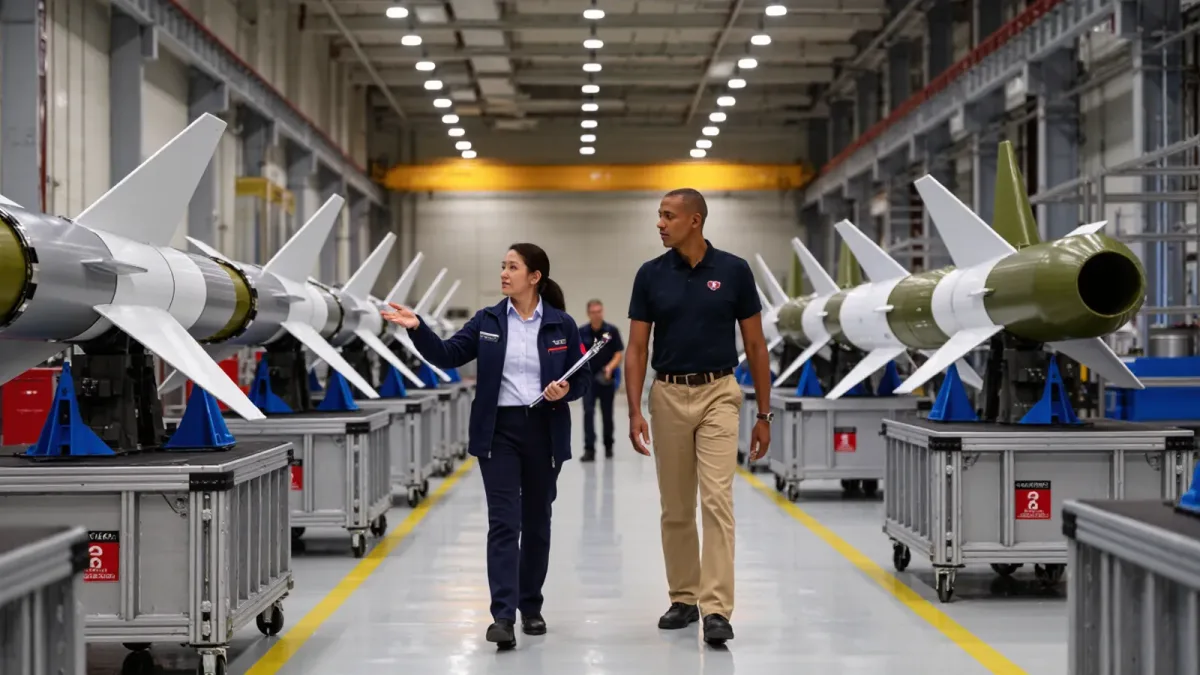
How does a government buy a fighter jet, a radar, or a fleet of trucks? The answer is defense procurement. It is the public process behind military buying. It is also one of the largest spending areas in any national budget.
This article walks through the basics in plain language. You will learn why governments buy weapons instead of making them. You will also see how contracts are shaped and what safeguards exist. The details come from standard reference material on public buying.
What Defense Procurement Is
Defense procurement is the part of public buying that covers military needs. Public buying rules normally cover all works, services, and supply contracts signed by a public authority. Military purchases stand out. They take up large parts of state spending. Still, the core idea is simple. A public body buys goods and services from private firms using public money. The rules of public buying set out this wider frame.
In short, this is shopping at state scale. The buyer is the government. The goods are military. The money comes from taxpayers. That mix makes the process unlike any other market.
The habit is old. Organized procurement has its roots in military logistics. Armies needed structured systems to supply troops with equipment and material. Modern defense buying grew out of those systems.
Why Governments Buy, Not Build
Many defense goods are public goods. A strong national defense protects everyone. One person's protection does not reduce another's. And nobody can be left out of its cover. Markets cannot supply such goods at the right scale. So the state steps in. It pays for defense from taxes. To deliver it, the government buys inputs from private firms. Think of vehicles, sensors, and equipment.
Buying from outside firms has another benefit. It lets the state draw on private skill and factory capacity. The state sets the need. The market then supplies the goods.
How the Buying Process Works
Most public buying uses open tendering. Suppliers bid for a contract. The buyer compares offers on price, quality, and delivery. Contract types vary. Fixed-price contracts set a firm total. Cost-plus contracts repay costs plus an agreed profit. Time-and-materials contracts cover work whose size is hard to predict. Indefinite-quantity contracts set terms without a fixed volume. For related coverage, see How economic price adjustment clauses shift inflation risk without scrapping fixed prices.
Each contract type shifts risk in a different way. A fixed-price deal pushes cost risk onto the supplier. A cost-plus deal protects the supplier. But it makes the buyer watch every invoice. Choosing the right type is a key skill in defense buying. This connects to our earlier piece, Fixed-price versus cost-plus: who carries the risk in a weapons contract.
Special Rules for Security
Weapons programs often sit outside normal open bidding. Why? Open bidding can expose details a country must keep secret. International rules allow exceptions for this reason. Tendering can be skipped when it would harm essential security interests. Some countries also favor domestic suppliers for defense supplies. Sole-source awards do occur. That is when one supplier is chosen without competition. They need a good reason, because they draw scrutiny.
Risks and Oversight
Defense buying carries well known risks. The sums are large. The products are complex. Officials and suppliers work closely together. That mix creates room for corruption, collusion, and fraud. Kickbacks and inflated invoices are classic examples. Rules that limit buyer choice exist to reduce these risks. Cost-plus deals can also invite cost overruns. Oversight bodies watch them closely for this reason.
Transparency helps where it is possible. So do clear rules and audits. No system is perfect. But simple safeguards make abuse harder and trust easier.
Conclusion: Why Defense Procurement Deserves Attention
Defense procurement blends market competition with public duty and national security. Governments buy weapons because markets cannot provide defense on their own. They wrap the process in special rules and oversight. Understanding those rules explains much about how modern states spend. It also shows where the risks lie. And it explains why weapons programs so often make the news.