
How offset audits and penalty clauses actually get enforced
Offset commitments are enforced by auditors, banks of credits and damage clauses — quietly, confidentially, and with penalties the public record almost never prices.
Procurement follows military purchasing from requirement through contract award to delivery, including bid evaluation, offset packages, financing, unit cost and schedule performance. Articles quote tender documents and audit findings rather than ministry summaries. Useful for suppliers, defense attaches, budget analysts and journalists tracking how a country spends equipment money.
Arms tenders followed from requirement to delivery: bid evaluation, offset obligations, unit pricing, schedule slippage and the politics inside an award.
Offset commitments are enforced by auditors, banks of credits and damage clauses — quietly, confidentially, and with penalties the public record almost never prices.

A delivery schedule written into a contract is a promise; the export license is the permission, and the gap between the two — measured in weeks, months or congressional review periods — is where most arms-delivery delays are actually born.

A idle factory does not save money; it keeps charging rent, loses its trained hands and forgets its process — and the next lot inherits every one of those costs.
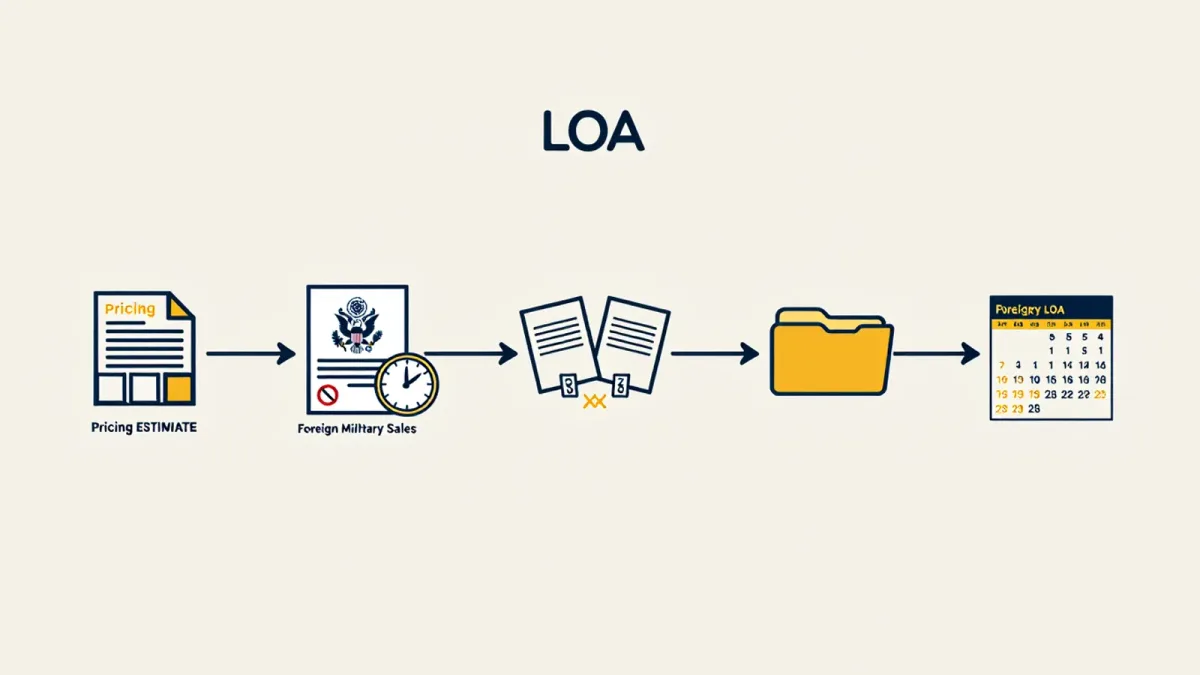
In Foreign Military Sales the signed Letter of Acceptance is the moment an offer becomes a binding government-to-government case, fixing prices, validity dates and a delivery schedule that can only change through formal amendment.

Contract type is the answer to one question — who pays when the estimate is wrong — and recent programs show both sides of that bargain in billion-dollar relief.

An offset is a negotiated obligation with a ledger, credits and penalties; industrial participation is the political label pasted on the same paperwork, and confusing the two misreads every big fighter deal.